
I’ll be straight with you—by 2026, the typical retiree playbook of flocking to Florida or Arizona feels a bit like a broken record. Sure, those sunny spots still have their perks, but a growing number of us are craving something with real soul, a tight-knit community, and maybe a little extra jingle in the pocket at the end of each month. After digging into the latest intel and talking to folks who’ve already made the leap, I’ve stumbled upon ten hidden gems that truly break the mold. These small towns mix jaw-dropping scenery, vibrant culture, and costs that won’t make your retirement fund sweat. So grab a cup of coffee, and let’s hit the road together—off the beaten path.
Fairhope, Alabama is like stepping into a postcard of coastal calm. Perched on Mobile Bay, this little slice of heaven packs a punch with its artsy vibe. Galleries and studios line the streets, and the historic downtown is straight out of a storybook. With a population under 3,000, a cost of living just 3% above the national average, and crime rates a whopping 62% lower than normal, it’s a no-brainer for those who want tranquility without sacrificing culture. The Fairhope Municipal Pier is my favorite spot to catch a sunset—talk about living the dream.
If you’re a desert lover like me, St. George, Utah will sweep you off your feet. Nestled in a red-rock wonderland with Zion National Park practically in your backyard, this city of about 107,000 is an outdoor junkie’s paradise. The downtown buzzes with boutiques and eateries, but it’s the hiking and biking trails that really sell the place. Sure, the cost of living is 6% higher than average, but when you’re surrounded by that kind of beauty, it’s worth every penny. I’d trade a generic golf cart for a mountain bike any day.

Moving up the coast, Brookings, Oregon is the kind of place where the Pacific Ocean whispers hello every morning. Tucked near the California border, it’s safe (33% lower crime than average) and easy on the wallet, with an average home price around $362,000. The real draw? Harris Beach State Park and a sleepy community vibe that makes you feel like you’ve discovered a secret. If you’re into mild weather and beach strolls without the touristy chaos, this is your ticket.
Now, let’s talk mountain magic. Sandpoint, Idaho sits on the shores of Lake Pend Oreille, backed by the Selkirk and Cabinet ranges. It’s pure eye candy all year round. With only 9,039 souls calling it home, the crime rate is 55% below the national average, and the sense of peace is through the roof. Schweitzer Mountain Resort means skiing in winter and hiking in summer—I call that a retirement win-win. The downtown is sprinkled with quirky shops and farm-to-table eateries, and honestly, I could see myself becoming a regular at the local coffee joint.
South Carolina’s Beaufort had me at “Antebellum charm.” Picture moss-draped oaks, historic homes straight out of a novel, and a waterfront park that begs for afternoon strolls. It’s like Charleston’s laid-back cousin, with a cost of living only 6% above the national average and home prices at a very manageable $323,000. For golfers, world-class courses are just a swing away. Plus, South Carolina’s tax perks for seniors are the cherry on top. My kind of Southern elegance without the snobbery.
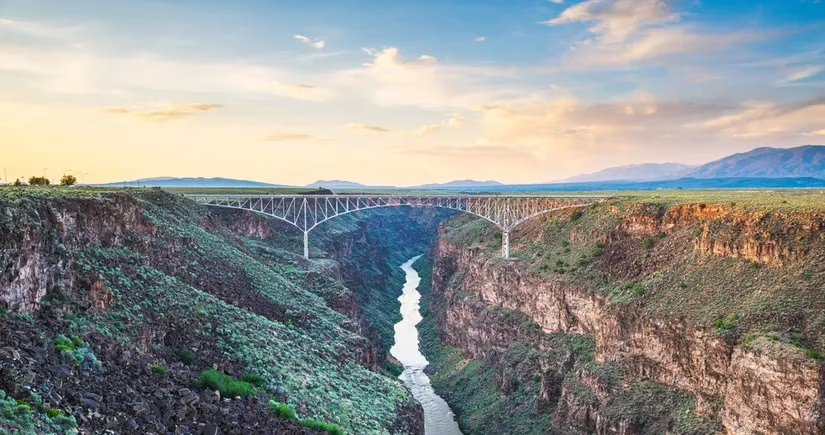
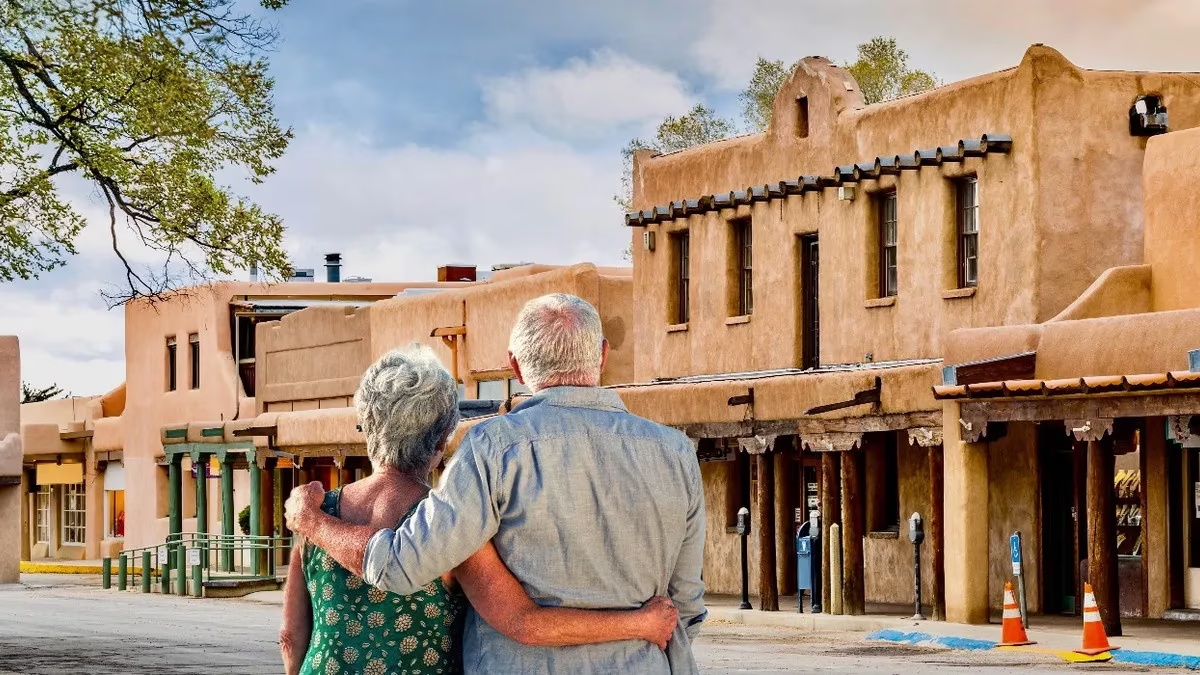
Venturing Southwest, Taos, New Mexico is a cultural goldmine. It’s only 70 miles from Santa Fe, but feels worlds apart. The UNESCO-listed Taos Pueblo hums with centuries of history, while the ski valley draws adventure seekers. The cost of living is actually 7% lower than the national average, and rent hovers around $1,104—a steal for the Southwest. And that Rio Grande Gorge Bridge? I stood there last year and felt like I was on top of the world. The blend of Native American heritage and artsy flair is absolutely magnetic.

Way out in West Texas, Marfa is weird and wonderful in all the right ways. With barely 1,628 residents, it’s an art desert paradise famous for the mysterious Marfa Lights. The cost of living is 13% below the national average, and you can snag a home for around $140,000—talk about a bargain. El Cosmico, a funky campground with teepees, is the epitome of Marfa’s offbeat spirit. If you want a retirement that’s anything but ordinary, this is your jam.
Galena, Illinois is a time capsule of 19th-century charm. Tucked into the rolling hills of the Midwest, its Main Street is lined with Victorian shops and cozy inns. The cost of living is 8% lower than the national average, and the crime rate is 43% lower. A trolley tour through the historic district is a must, and nearby Chestnut Mountain Resort keeps the active retirees busy. I love that it’s a stone’s throw from Chicago for a weekend city fix, but feels miles away from the rat race.

If you think Nevada is all neon lights, think again. Ely is a high-desert hideaway where the night sky puts on a show and Great Basin National Park is your backyard. With a cost of living 12% below average, no state income tax, and a population of under 4,000, it’s a financial no-brainer. The historic Hotel Nevada and the Northern Railway Museum add a dash of nostalgia. I’ll take starry nights over slot machines any day.
Finally, Helen, Georgia is like wandering into a Bavarian fairy tale without crossing the Atlantic. Set in the Blue Ridge foothills, this tiny town of 590 folks is 61% safer than the average U.S. city and comes with an Alpine whimsy that’s impossible to resist. Tube the Chattahoochee, sample local wines, or hit Oktoberfest—yep, they go all out. Georgia’s tax breaks for retirees sweeten the deal, and Unicoi State Park is a stone’s throw away. It’s the ultimate whimsical escape.

So there you have it—ten spots that rewrite the retirement rulebook. Whether you’re drawn to art, mountains, coastlines, or quirky small-town vibes, 2026 is the year to think outside the box. I’m already eyeing a move myself, and honestly, life’s too short for cookie-cutter golden years. Here’s to blazing a trail where the real stories are.
Comments