
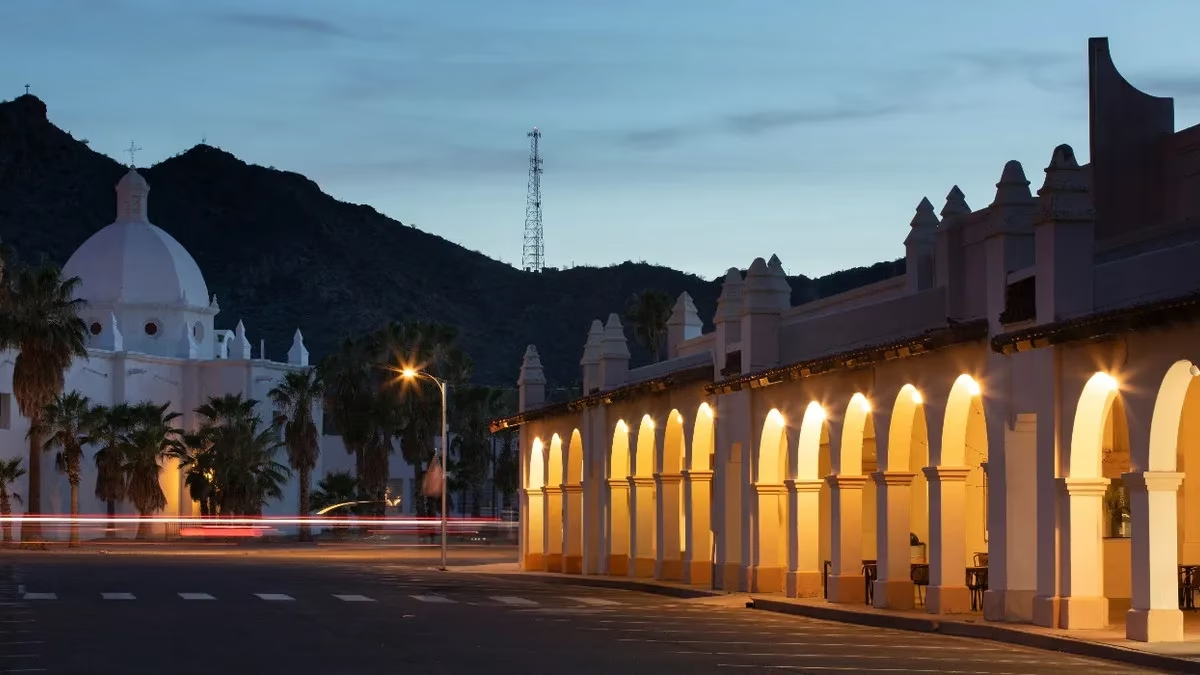
Tucked into the heart of the Sonoran Desert, a town of barely 3,000 souls offers a kind of magic that Arizona’s Grand Canyon and Sedona simply cannot replicate. Ajo is not monumental; it is intimate, raw, and layered with stories. Why then, despite sitting right along the heavily traveled State Route 85, does this former copper mining community remain so blissfully uncluttered by mass tourism? Perhaps the answer lies in its very character—a place that rewards curiosity rather than convenience.
In 2026, as travelers increasingly seek authentic, crowd‑free experiences, Ajo has quietly emerged as a sanctuary for those who crave the true Southwest. The drive itself hints at what is to come: saguaros raising their arms against a piercing blue sky, distant buttes shimmering in the heat, and then, suddenly, the gleaming white arches of the Spanish Colonial Revival plaza rising like a mirage.
A Town Built on Copper and Dreams
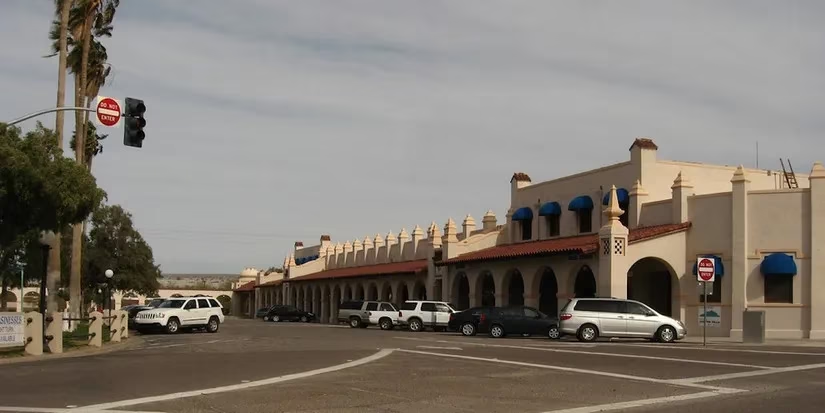
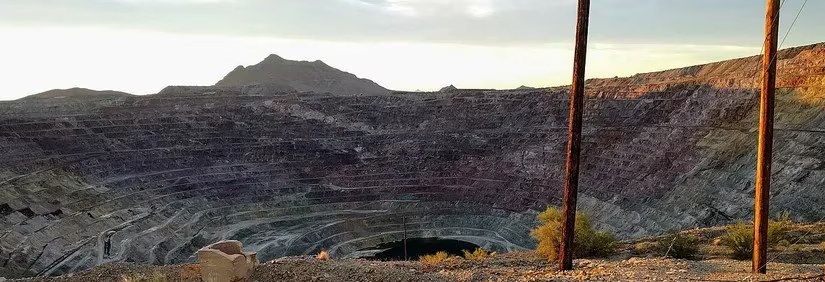
Ajo’s origins stretch back to the 1750s when Spanish explorers first pulled copper from its arid soil. For most of the 20th century, the town throbbed with the rhythm of the New Cornelia Mine, a massive open‑pit operation that became the district’s only productive mine. When the mine closed in 1983, many expected the town to fade into ghost‑dust. Instead, Ajo reinvented itself as a haven for artists, retirees, and desert lovers.
Today, the mine remains a hauntingly beautiful attraction. Just a short drive south of the historic plaza, the Mine Lookout offers a staggering view across nearly two miles of terraced excavation—over a thousand feet deep in places. Standing there, one cannot help but marvel: how did human hands carve such a colossal scar and yet leave behind such a serene landscape? It is a monument to both industry and resilience.
The Plaza: A Living Postcard
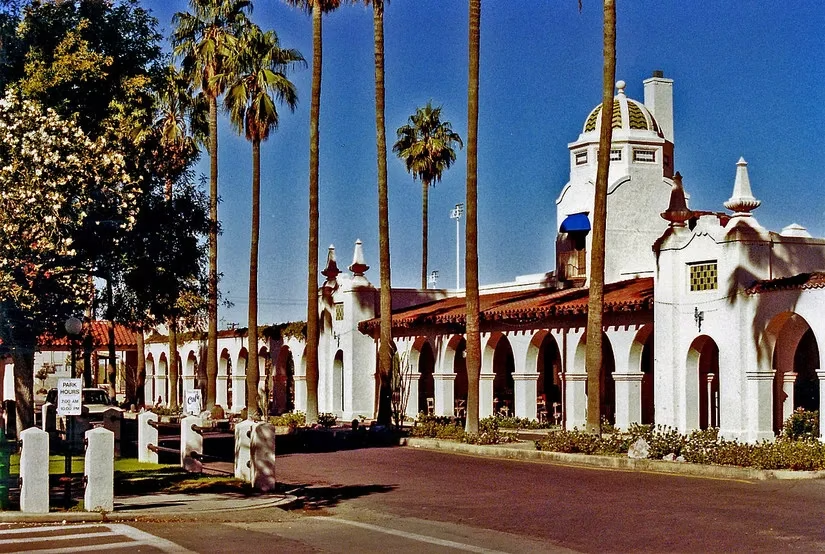
The heart of Ajo is its 1917 plaza, a stunning example of Spanish Colonial Revival architecture that has been meticulously preserved. Surrounded by shaded palms and graceful arches, it invites a slow stroll. On any given morning, you might see a painter capturing the light as it dances on terracotta tiles, or a local historian sharing tales of the town’s boom days. The plaza is not just a landmark; it is a daily gathering space where the past and present converse.
An Arts Scene That Paints the Desert
Ajo defies every stereotype of a sleepy desert town by boasting a vibrant, deeply authentic arts community. A few steps from the plaza, the Curley School Artisan Apartment complex transforms into a creative campus. The photo gallery here showcases the work of local artists, and the auditorium hosts everything from yoga classes and dance performances to intimate concerts. The 2026 season has already announced a new series of artist‑in‑residence programs that invite visitors to co‑create with desert sculptors and muralists.
The streets themselves are a canvas. Around town, colorful murals and whimsical installations surprise at every turn. The most arresting is the Artistic Alley, a narrow lane where murals by multiple hands burst into life. A self‑guided walking tour here feels like stepping through an open‑air gallery without any admission fee.
Wilderness That Whispers and Roars
For outdoor enthusiasts, Ajo functions as a gateway to two remarkable protected areas. Organ Pipe Cactus National Monument, less than an hour away, is a UNESCO biosphere reserve that safeguards a rare concentration of organ pipe cacti. What awaits is not just a hike but an immersion: the trail loops wind through stands of towering saguaro and ocotillo, and birdwatchers can spot Gila woodpeckers and vermilion flycatchers.
The park’s crown jewel is Ajo Mountain Drive. This 21‑mile dirt road takes about two hours to navigate and offers continuous, evolving panoramas. As the route climbs, the Sonoran Desert folds into mountains of jagged volcanic rock, revealing why this drive is frequently described as one of the most photogenic in the state.
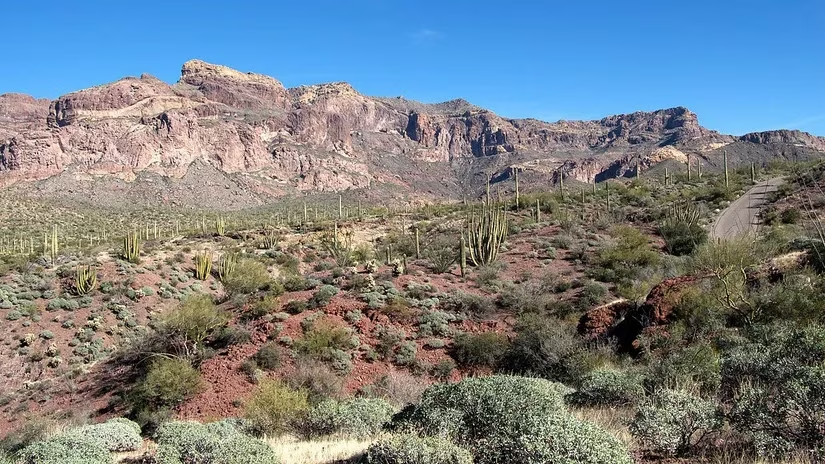
Equally captivating is the Cabeza Prieta National Wildlife Refuge, which sprawls across more than 860,000 acres of raw wilderness. Here, the silence is so profound it becomes a presence. Hiking paths lead past endangered Sonoran pronghorn habitat and ancient lava flows, reminding visitors that Arizona’s beauty often lies not in superlatives, but in subtleties.
Why Ajo Now?
As the travel world fully recovers to pre‑pandemic energy in 2026, overtourism has once again strained many iconic destinations. The Grand Canyon sometimes requires reservations months in advance, and Sedona’s trails can feel like crowded boardwalks. Against this backdrop, Ajo stands apart. It is only a two‑hour drive from Phoenix and Tucson, yet it feels a world removed. The town has wisely embraced slow tourism, adding small boutique lodgings and farm‑to‑table cafes without sacrificing its soul.
For the traveler who asks, “What is truly unspoiled left in Arizona?” the answer rests in a town that once fed copper to the world and now feeds the spirit. Whether exploring the mine overlook, wandering the arches of the plaza, or watching a desert sunset set the organ pipe cacti ablaze, Ajo delivers an experience that is both grounding and elevating. It is not a place to rush through on the way to a Mexican beach; it is a destination that commands a pause, a deep breath, and a lasting memory.
While Ajo offers a serene escape into the natural and cultural wonders of Arizona, many travelers also seek leisure activities that can complement their adventure. Whether it's an evening of relaxation after a day of exploration or a quiet night in one of Ajo's boutique lodgings, finding engaging entertainment can enhance your travel experience. For those who enjoy unwinding with digital entertainment, knowing where to buy cheap games can be a great resource. Discovering new games at affordable prices can be a delightful addition to your travel downtime, ensuring that your journey remains both exciting and economical.
Comments