
Across the United States, tucked between famous landmarks and well-trodden tourist trails, lies a collection of places that redefine the idea of a vacation. These are the stops where curiosity pulls you harder than any guidebook recommendation. In 2026, travelers continue to seek out the delightfully weird, the historically haunted, and the naturally inexplicable. From a shoreline made entirely of polished glass to a mansion built to confuse ghosts, the country invites you to step off the beaten path and into the bizarre.
✨ Glass Beach: Where Trash Became a Rainbow
In Fort Bragg, California, there is a beach that tells a story of transformation. For more than sixty years, from 1906 until 1967, residents treated the rugged coast as a dumping ground. Old cars, household appliances, and countless glass bottles were tossed over the cliffs without a second thought. The powerful Pacific took over from there. Decades of relentless wave action crushed, smoothed, and polished the discarded glass into a carpet of soft, gem-like pebbles that now shimmer in the sand.
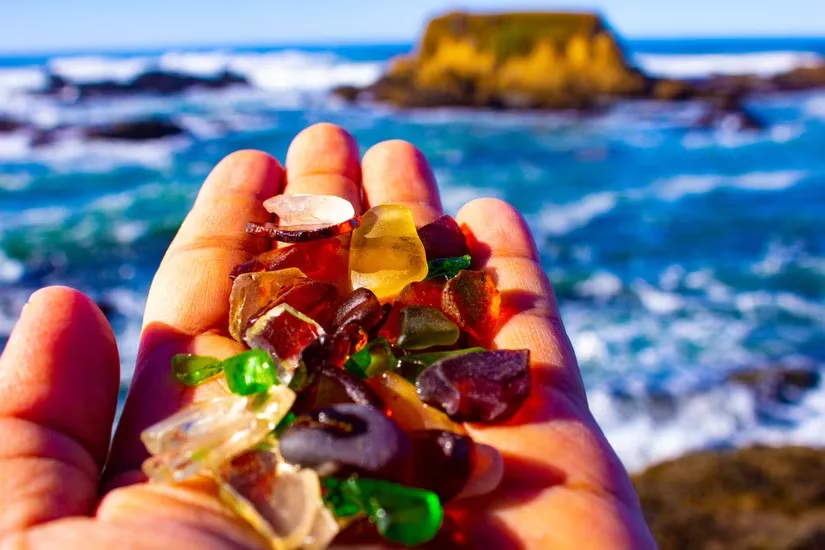
The beach is now protected, and visitors are asked to only take photographs and leave the glass behind. The rangers politely remind everyone that the real treasure is the sight itself. Keen-eyed wanderers may catch glimpses of rare colors: deep sapphire from old apothecary bottles or fiery ruby slivers from pre-1967 car taillights. At sunset, the whole shoreline catches the light like a scattered jewel box. It is a surreal, accidental masterpiece created by waste and water.
🌈 Fly Geyser: An Accidental Art Installation in the Desert
Out in Nevada’s vast Black Rock Desert, an oddity rises from the flat, dusty ground. Fly Geyser was never meant to exist. In the early twentieth century, a well was drilled in search of water, but geothermal springs were breached instead. Attempts to cap the leak failed, and mineral-rich water began escaping through fissures in the earth. Over many decades, dissolved calcium carbonate built layer upon colorful layer, forming a towering, alien-like cone that now erupts continuously.
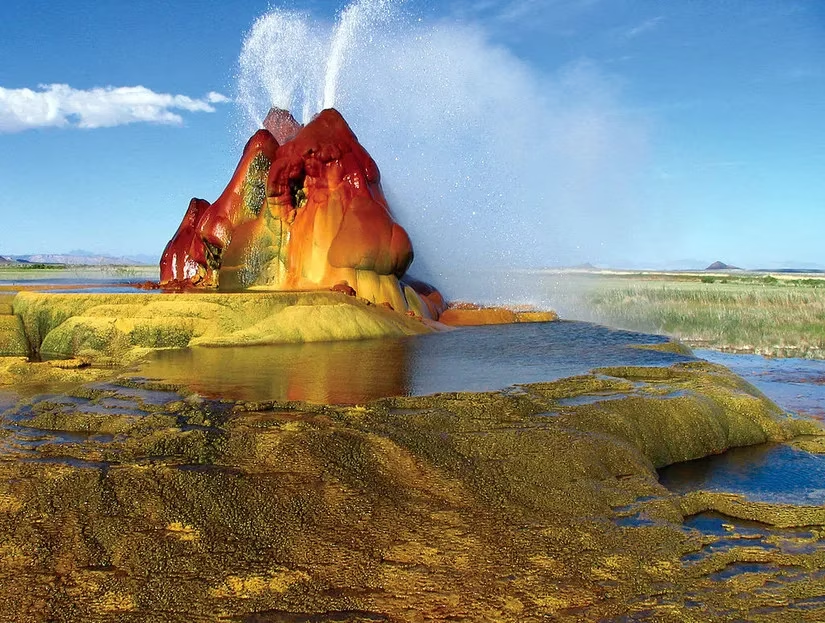
Thermophilic algae thrive in the steamy outflow, painting the cones in vivid shades of green, orange, and deep red. Water shoots up to five feet into the dry air, creating a miniature oasis that seems transported from another planet. The geyser sits on private land and is not open for casual visits, but curious drivers on State Route 34 can see it from a distance. In 2026, it remains a quiet, unpolished wonder—a lively accident that refused to be sealed.
👻 Zak Bagans’ The Haunted Museum: Fear on Display
Las Vegas is a city known for neon excess, but one of its most peculiar attractions trades slot machines for spine-tingling encounters. Zak Bagans’ The Haunted Museum occupies a sprawling early 1900s mansion, its dark corridors packed with artifacts linked to tragic and mysterious events. A two-hour guided tour leads small groups through thirty meticulously curated rooms, each telling a different kind of ghost story.
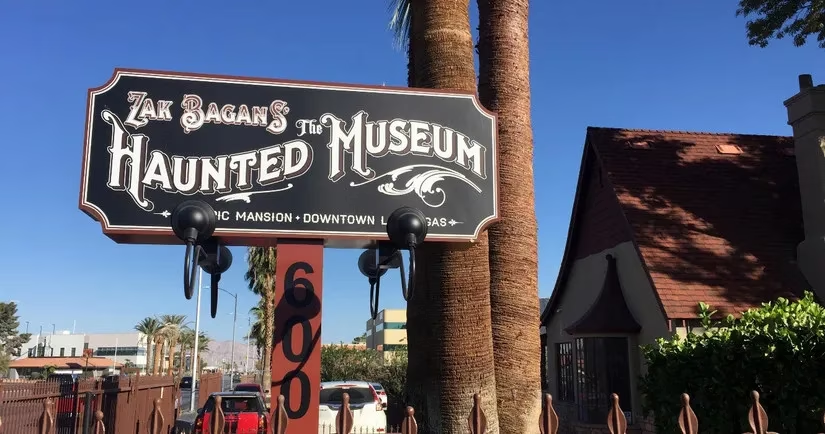
Inside, a jail room holds memorabilia from infamous murder cases. The doll room brims with unsettling porcelain figures whose glassy eyes seem to follow you. The bravest guests are invited to sit in the legendary Devil’s Chair, a wooden seat said to invite immediate paranormal activity. Staff report unexplained footsteps, sudden temperature drops, and disembodied whispers echoing in the hallways. The museum is part historical archive, part dare, and entirely unforgettable for those who believe—and even for those who don't.
🏚️ Winchester Mystery House: A Mansion of Endless Doors
In San Jose, California, a majestic Victorian mansion hides a deeply strange secret behind its elegant facade. The Winchester Mystery House was the lifelong project of Sarah Winchester, widow of the firearms magnate. After her husband’s death, a medium reportedly told her she must continuously build a home to appease the spirits of those killed by Winchester rifles. Construction began in 1884 and did not stop for thirty-eight years, running day and night until Sarah’s own death.
The result is a beautiful architectural chaos. Some staircases lead directly into a ceiling. Doors swing open onto solid walls or forty-foot drops. Hallways narrow to just a few inches wide, and windows are installed in interior walls. The mansion’s 160 rooms twist and turn in a constantly evolving design, never intended to be logical—only to confuse any spirits that might try to find her. Guided tours reveal a house that is equal parts masterpiece and monument to obsession. Even in 2026, a palpable sense of sorrow and mystery lingers in the silent rooms.
🫧 Seattle’s Gum Wall: A Sticky Community Canvas
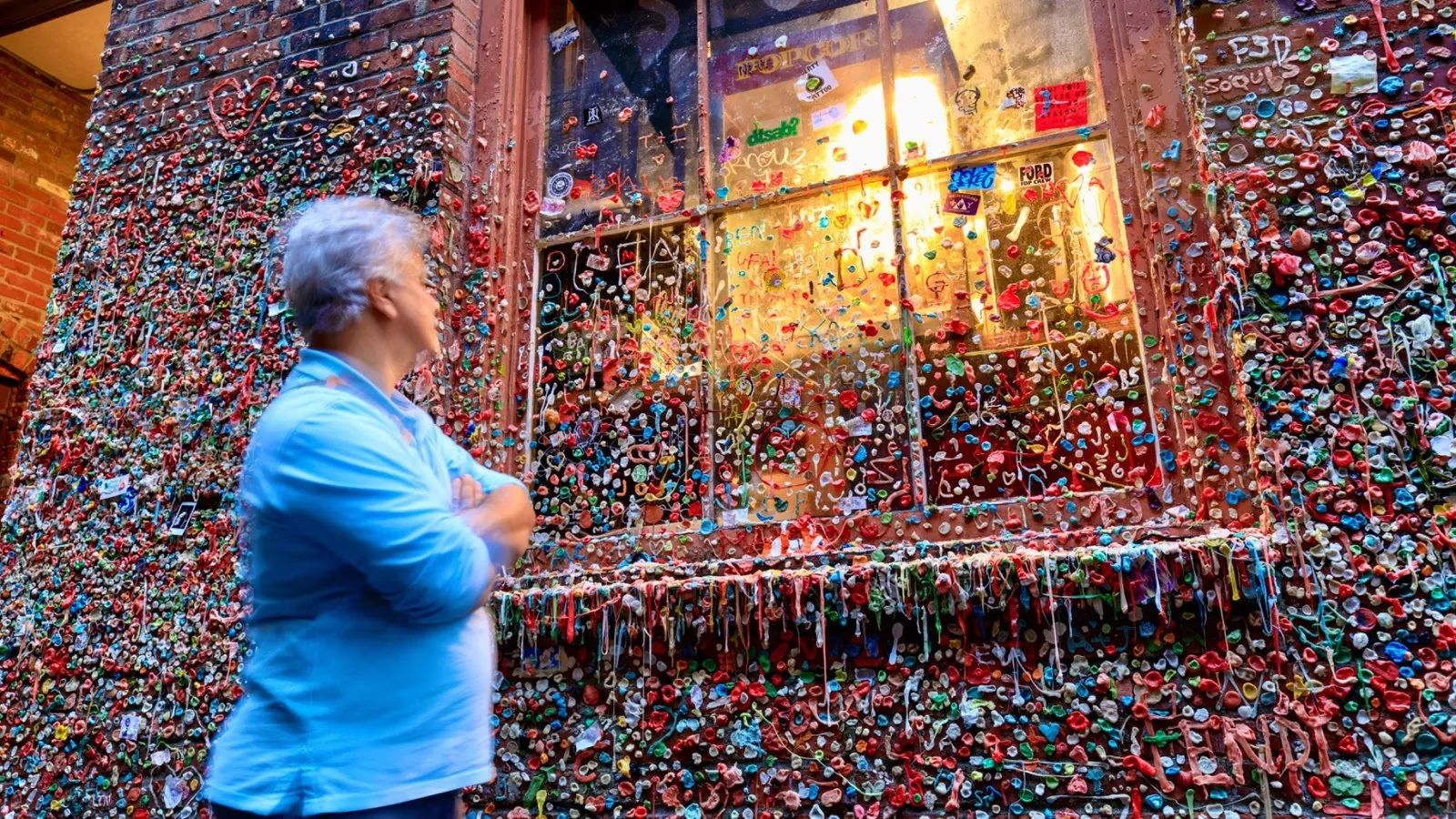
Down a narrow alley near Pike Place Market, a spectacle of collective human habit clings to the brickwork. Seattle’s Market Theater Gum Wall began unexpectedly in the 1990s, when patrons waiting outside an improv theater started pressing their chewed gum onto the wall and sticking coins into it. What began as a small, somewhat unhygienic tradition ballooned into a full-blown phenomenon. Now, the wall is completely coated in thousands of wads of gum in every imaginable hue, layered like a warped relief sculpture.
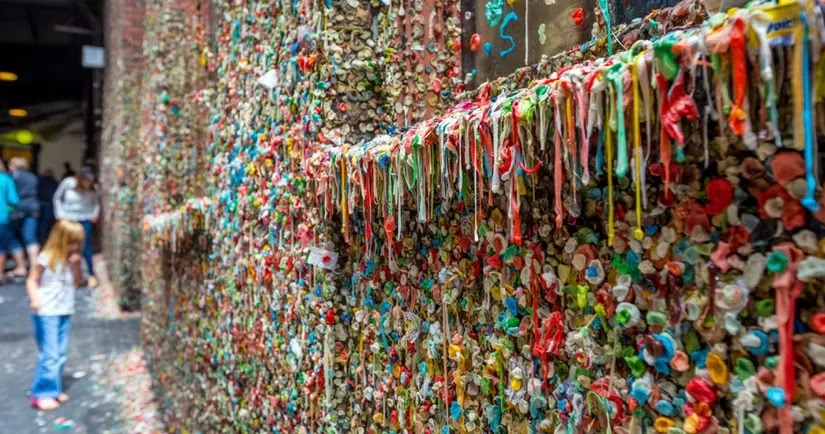
In 2015, authorities gave the wall its first thorough cleaning, removing over twenty years of accumulated gum. But within days, new pieces started appearing. The community had decided this quirky landmark would endure. Today visitors add their own small contribution, molding messages, names, or just a simple sticky blob. It is an oddly endearing, if slightly gross, testament to what can happen when a city lets a weird tradition thrive.
🌊 Thor’s Well: The Ocean’s Bottomless Drain
On the rugged Oregon coast near Yachats, the ocean behaves with theatrical flair. Thor’s Well is a natural sinkhole that looks like a portal draining the entire Pacific. In reality, the “well” is the collapsed roof of a sea cave, leaving a deep, roughly six-meter-wide opening into which waves rush and retreat. During high tide, the incoming swells slam against the rocky edge and explode upward in violent spray, then are sucked back down with a guttural roar.
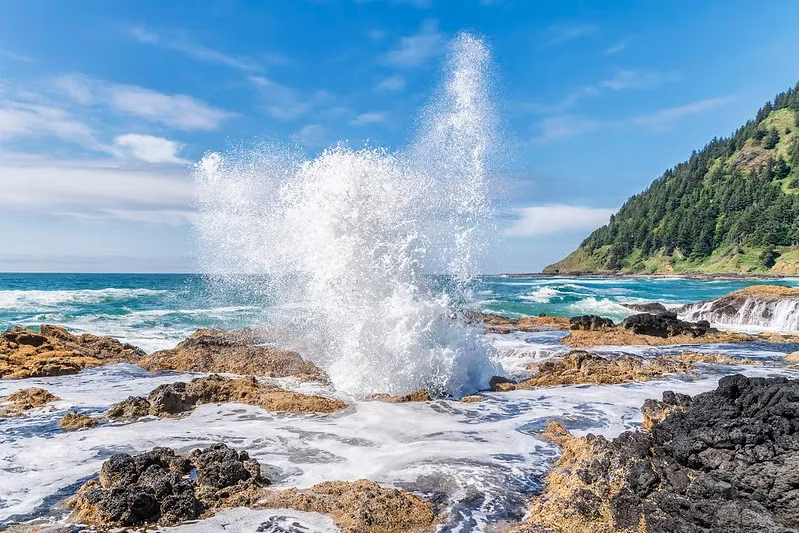
A paved path leads to a safe viewing platform, though many adventurous photographers creep closer to the slick rocks for a better angle. The undertow is no joke—waves can arrive without warning, dragging unwary sightseers dangerously close to the churning maw. At sunset, salt spray catches the golden light, and the well appears to breathe, endlessly swallowing and spitting back the sea. It is one of nature’s most hypnotic performances.
🏥 The Mutter Museum: Medical Marvels and Macabre Treasures
Philadelphia is home to one of the world’s most unusual museums, a place where science meets the unsettling. Run by the College of Physicians of Philadelphia, the Mutter Museum holds a vast collection of medical instruments, anatomical specimens, and historical curiosities arranged in elegant 19th-century cabinets. Each year, about 130,000 visitors pass through its doors, drawn by the promise of seeing things they will not find anywhere else.
The exhibits are staggering. A small slice of Albert Einstein’s brain floats in a glass slide, inviting quiet contemplation. The skeleton of a 7-foot-6-inch man stands as the tallest on display in North America. Elsewhere, a plaster cast of the famous conjoined twins Chang and Eng Bunker reminds viewers of a complex human story, while a jar preserves the malignant tumor famously removed from President Grover Cleveland’s jaw. The museum balances scholarly rigor with a deep sense of humanity, turning what could be merely morbid into a deeply educational experience.
🛄 Unclaimed Baggage Center: Treasure from Lost Journeys
In the small city of Scottsboro, Alabama, lost luggage finds a second life. The Unclaimed Baggage Center began humbly in 1970 when a man named Doyle Owens set up card tables outside his home to sell unclaimed airline bags. More than fifty years later, the operation has grown into a 40,000-square-foot retail store that covers an entire city block and welcomes over a million visitors annually.
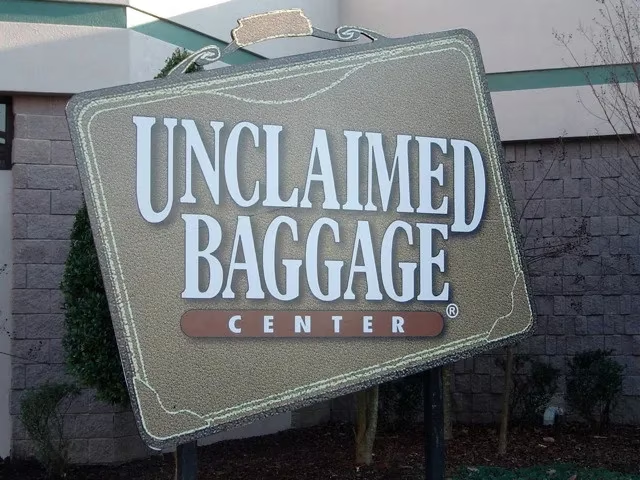
Pallets of unclaimed suitcases arrive from airlines, and staff sort, clean, and price the contents. The store is organized into departments offering everything from electronics and designer clothing to books and sporting gear. Over the decades, employees have uncovered some truly astonishing finds: a 3,000-year-old Egyptian funerary mask, a live rattlesnake, a forty-carat emerald, and even a NASA camera from a space shuttle mission. The Unclaimed Baggage Center turns the frustration of lost luggage into a treasure hunt where every shelf holds the possibility of an outrageous surprise.
Each of these destinations holds a mirror to some offbeat corner of human experience—remnants of garbage polished into beauty, a fearful widow’s chaotic masterpiece, a wall built from gum, and a medical collection that makes you reconsider the boundaries of normal. In 2026, they stand as proof that the most memorable journeys are often the ones that lead you not toward the familiar, but toward the wonderfully strange.
Comments