
Florida – the Sunshine State. You might picture endless coastlines, the iconic Miami beaches, and maybe a few gators. But have you ever wondered what lies beneath those turquoise waves? For the curious souls who trade sun loungers for scuba tanks, Florida reveals a whole different world: a playground of shipwrecks, rainbow coral cities, and marine life encounters that belong in a nature documentary. And guess what? In 2026, these submerged treasures are more vibrant than ever.
So, let’s cut through the noise of typical tourist traps. Whether you're a bubble-blowing newbie or a seasoned dive master, Florida’s lesser-known dive sites are calling. Ready to swap your flip-flops for fins? Let’s dive in.
🚢 Key Biscayne’s Maritime Heritage Trail: A Time Capsule for Wreck Enthusiasts
If the idea of gliding through history makes your heart race, the waters off Key Biscayne will be your happy place. This isn't just any underwater trail; it’s a curated path through six historic shipwrecks that tell stories of storms, trade, and tragedy. Advanced divers (wreck certification required!) can explore the skeletal remains of vessels like the 19th-century Arratoon Apcar and the 1966 Mandalay.
But wait – it’s not all rust and reminiscence. These wrecks have become thriving ecosystems. Picture this: a school of French angelfish fluttering past a porthole, while a spotted dragonet does its graceful dance on the deck. Keep your eyes peeled for curious cowfish, majestic queen angelfish, and if luck is on your side, a passing shark or ray. It’s like swimming through a museum where the exhibits are alive and occasionally nibble on your fins.
🐠 Blue Heron Bridge: The Beginner’s Paradise (That Even Pros Love)
Now, if the thought of wreck diving makes your regulator tremble, relax. Head to Blue Heron Bridge near Jupiter. This spot is so beginner-friendly it almost feels like cheating. Why? Because it’s nestled in a protected lagoon with bath-warm, calm waters. You can literally stand up in some areas.
What’s the big deal, you ask? It’s the cast of characters beneath the surface. Tiny, ethereal seahorses wrap their tails around seagrass. Octopuses flaunt their camouflage skills like squishy Houdinis. Rays glide by like silent UFOs, and if you’re incredibly lucky, a manatee might lumber past, looking like a blimp with a Boogie Board. Dolphins occasionally cruise through too, proving that you don’t need depth to find the wildest company.
Pro tip for the non-divers reading this: Blue Heron Bridge also has a snorkel trail. So, grab a mask and you can still witness this underwater circus. And in 2026, the seagrass beds are healthier thanks to ongoing conservation, making seahorse sightings more frequent than ever.
🗿 John Pennekamp Coral Reef State Park: Where Art Meets the Abyss
Here’s a nugget of travel trivia for you: America’s very first underwater state park is right here in Florida. John Pennekamp Coral Reef State Park in Key Largo is a must-dive, not just for the vibrant reefs, but for one truly breath-taking centerpiece.
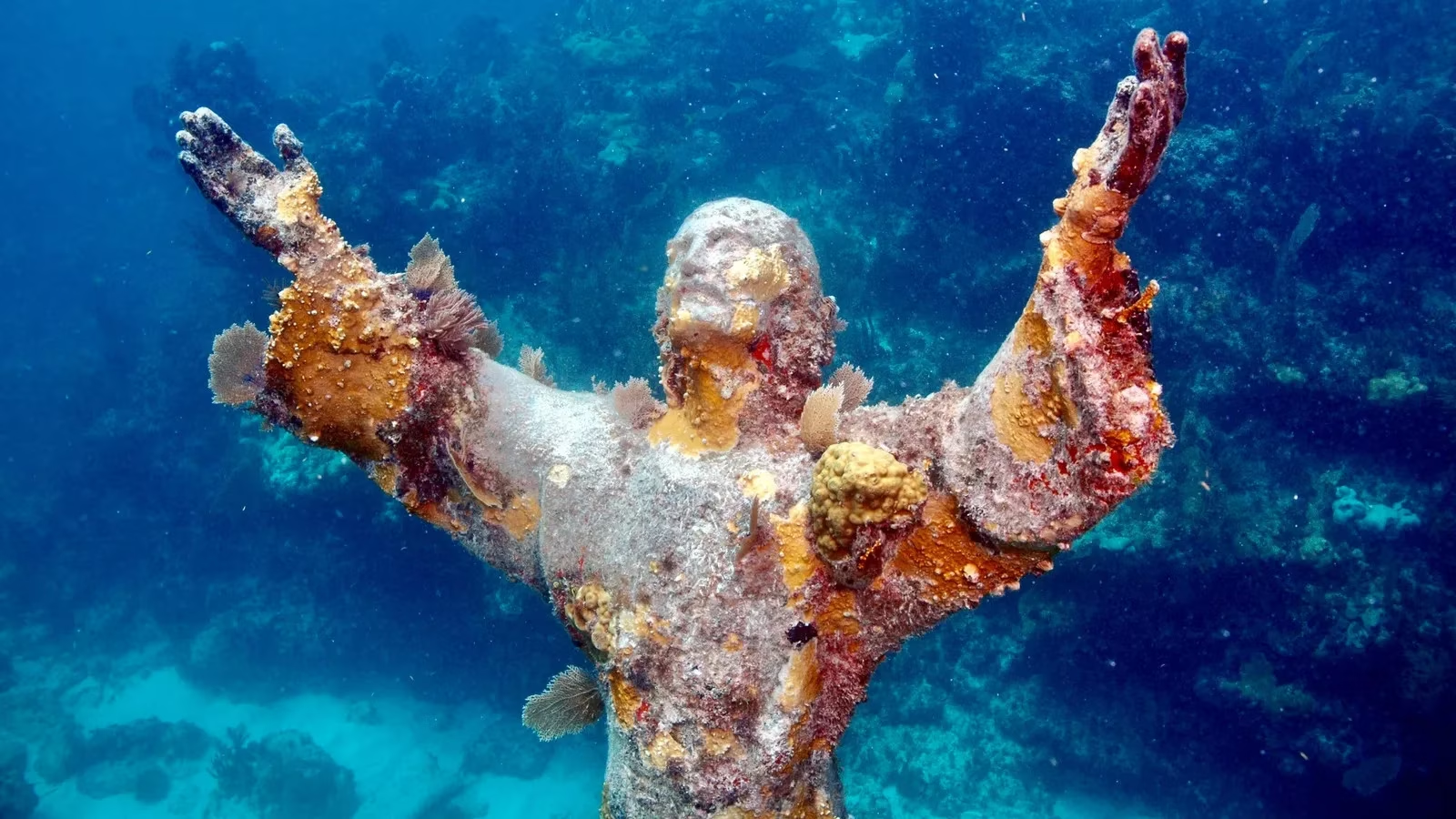
Twenty-five feet below the surface, standing sentinel on the sandy floor, is a 9-foot-tall bronze statue of Christ. Known as "Christ of the Abyss," this submerged guardian was cast from the same mold as the original Il Cristo degli Abissi in the Mediterranean. Placed here in 1965 (which means it’s been doing its underwater duty for over 60 years now in 2026!), the statue is no longer just bronze. It’s a living canvas, encrusted with corals and sponges, with damselfish darting around its outstretched arms.
But let’s not forget the reef itself. This place is a kaleidoscope of parrotfish, barracudas, sea cucumbers, and anemones. The best part? The park offers diving classes, so even if you’ve never blown a single bubble, you can get your certification right here and make the statue your first open-water dive. Talk about a memorable graduation ceremony!
🏗️ Collier County Artificial Reef: Hope Grows on Concrete
Not all reefs are as old as the sea. Off Marco Island, the Collier County Artificial Reef is a testament to human ingenuity in the face of environmental challenges. Since 2007, coastal managers have been placing structures underwater to kickstart an ecosystem battered by climate change. The result? A man-made marvel that in 2026 looks drastically different – and wildly alive – compared to a decade ago.
This isn’t just a pile of rubble. Dive sites with names like "The Cage" and "Rocky Road" have attracted an incredible community. Butterflyfish and angelfish flit about, triggerfish give you their grumpy stare, and spadefish form silvery clouds. But the undisputed stars are the goliath groupers. These behemoths can reach 7 feet long and weigh as much as a small car. Seeing one emerge from the blue is a masterclass in feeling tiny. Advanced open-water divers, this one’s for you.
🌊 Florida Keys National Marine Sanctuary: Choose Your Adventure
The Florida Keys are basically a cheat code for divers. The Florida Keys National Marine Sanctuary wraps around the islands like a liquid treasure chest. Here, the choice is yours: do you explore the haunting Shipwreck Trail, where history lies rusting beneath the waves? Or do you drift along the serene coral gardens of Carysfort and Alligator Reef?
Marine life here reads like a “who’s who” of the Atlantic. Invertebrates like the Bahama sea star and long-spined urchin share real estate with octopi, groupers, and eels. Reef sharks patrol the outskirts, while eagle rays fly through the water with alien grace. And don’t forget the air-breathing visitors: bottlenose dolphins and green sea turtles are frequent celebrities.
In 2026, thanks to aggressive marine protection efforts, turtle nesting has seen a promising uptick, and snorkelers often spot juvenile turtles in the shallows. It’s a hopeful sign that these dives will only get better.
🛢️ Tenneco Towers: Industrial Relics Turned Reef
If you’re a diver who loves a story of rebirth, set your coordinates for Fort Lauderdale’s Tenneco Towers. Donated way back in 1985 by an oil company, these recycled rig pieces now form a towering artificial reef. Maintained by the Broward County Artificial Reef Program, it’s a beacon of how we can give back to the ocean.
Diving here is like entering a vertical metropolis. Schools of tuna zip by, angelfish loiter in the shadows, and barracudas glint like silver torpedoes. Sea turtles often stop by for a cleaning session, and several species of coral have made these steel beams their permanent home. It’s a gritty, powerful dive that reminds you: nature can reclaim anything.
🧹 Barracuda Reef: A Day Spa for Ocean Giants
Last but definitely not least, let’s talk about Barracuda Reef near Port Everglades. With depths maxing out at just 33 feet, this is an ideal playground for open-water certified divers who aren’t ready for the deep stuff. But don’t let the shallow depth fool you – the show here is top-tier.
Of course, barracudas hang out, watching you with that toothy, unblinking stare. But the real magic? The cleaner fish. These tiny entrepreneurs have set up cleaning stations where larger animals pause for a full-body exfoliation. Imagine floating weightless and witnessing a nurse shark or a massive sea turtle hang motionless while tiny wrasses and gobies nibble away dead skin and parasites. It’s a spa day, and you’ve got a front-row seat. Moray eels, rays, and reef fish all queue up for the service.
Honestly, watching a moray eel with its mouth wide open, patiently letting cleaner fish do their thing, is one of the most zen experiences you’ll ever have underwater.
🤔 So, Which Dive Will You Call Your Florida Moment?
Florida’s dive scene is ridiculously diverse. It’s not just about the glamour of the Keys or the deep wrecks for tech divers. It’s also about the hidden lagoons, the hopeful artificial reefs, and the statues that blur the line between art and nature. Whether you’re chasing goliath groupers or just want to giggle at a pufferfish, 2026 is the year to explore these blue frontiers. The bubbles are waiting.
Comments