
The nation’s capital swells with monuments, museums, and—let’s be real—a relentless flood of selfie sticks and fanny packs. By the time a visitor has queued for an hour just to glimpse the Hope Diamond or elbowed through a sea of school groups on the National Mall, the thrill of sightseeing can curdle into pure exhaustion. The savvy traveler, however, knows that Washington D.C. harbors a parallel universe of tranquil gems that practically whisper for attention. These crowd-shy spots don’t need to shout; they’re perfectly content to let the big-name attractions hog the limelight while offering a deep, unhurried breath to anyone who stumbles upon them.
Let’s be honest—sometimes you crave a little elbow room, a moment where the only line you’re in is the one forming in your own mind as you debate which pastry to grab later. For the introvert, the overwhelmed parent, or simply the human who has seen one too many tour buses, these underrated Washington D.C. hideaways are a sanity-saver. And no, they don’t require a secret handshake—just a willingness to wander a few blocks off the beaten path.
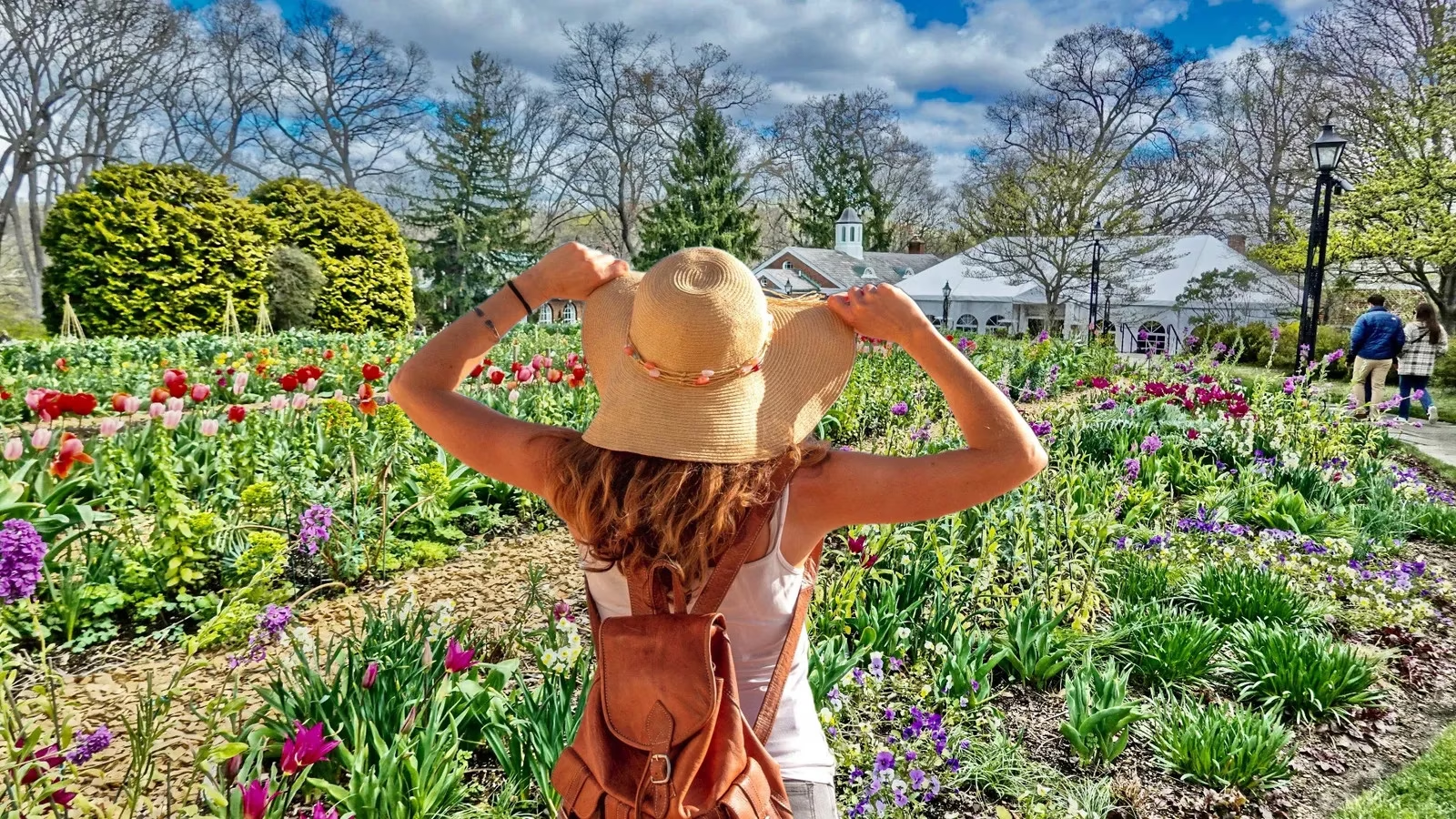
First up, Hillwood Estate, Museum & Gardens practically tiptoes into the conversation. Once home to Marjorie Merriweather Post (yes, the cereal heiress—she knew her way around a breakfast table and a priceless Fabergé egg), this lavish mansion floats on thirteen acres of gardens way up in Northwest D.C. It’s like someone took a Russian imperial palace, gave it a patisserie-quality makeover, and hid it behind a hedge. Inside, one of the largest collections of Russian imperial art outside of Russia waits quietly. Outside, the gardens serve up a symphony of blooms without a single jostling tourist in sight. And here’s a phrase that sounds almost mythical in D.C.: free parking. Yep, you heard that right—your car gets a vacation too.
A little further northeast, the National Arboretum spreads out over 446 acres of leafy bliss, totally unimpressed by the cherry blossom chaos erupting downtown. While the Tidal Basin turns into a human smoothie each spring, the Arboretum’s azaleas erupt in riotous color with nary a crowd. It’s open every day except Christmas, and its star collection of bonsai trees—some older than most countries—seems to meditate silently on the passing of time. There’s also a strange, majestic treat: the original columns from the U.S. Capitol Building, now standing like ancient ruins in a meadow, perfect for brooding Instagram photos or just contemplating the fact that even columns need a retirement plan.
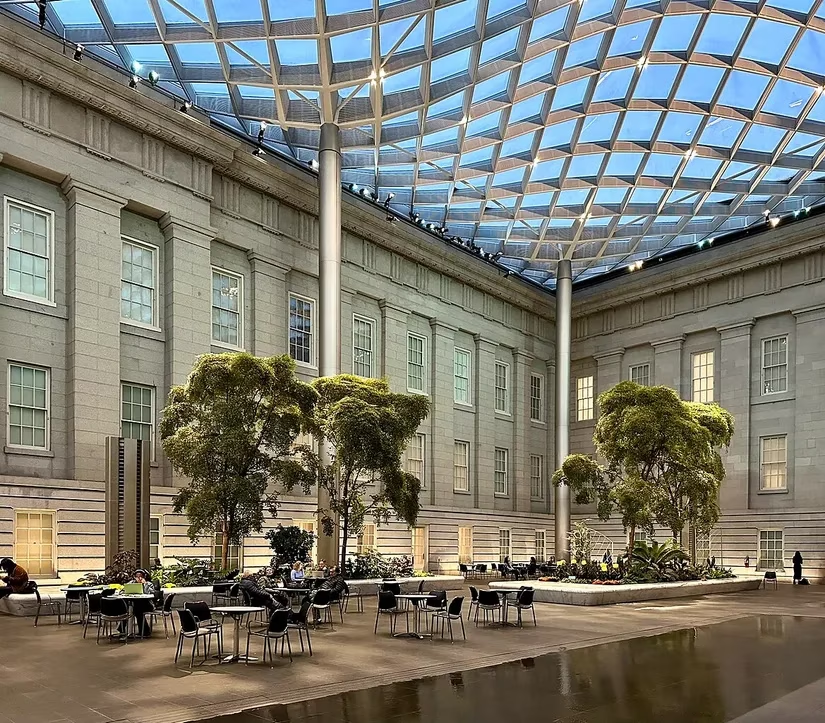
Right in the thick of the Smithsonian universe lies a breathing space that many tourists march right past. The Robert and Arlene Kogod Courtyard, sandwiched between the American Art Museum and the National Portrait Gallery, is a glass-topped haven where natural light pours down and your feet finally get a chance to forgive you. Old meets new in the architecture, and the gentle hush feels almost conspiratorial, as if the courtyard itself is in on the secret: this is where you come to recharge, sip water, and pretend you’re the protagonist of a very refined movie. No one will rush you.
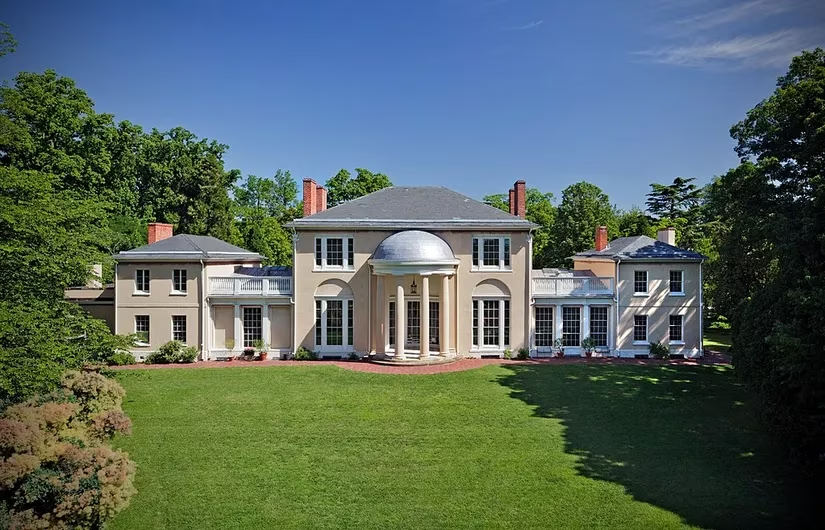
Georgetown, for all its charm, can still get congested with shoppers and university students. But tucked away on just five and a half acres sits Tudor Place, a pinkish-hued estate that once housed descendants of Martha Washington. It’s like Mount Vernon without the marathon drive and the tour-group gauntlet. For a suggested donation of a mere ten bucks, visitors can wander the house and its serene garden, which seem to exist in a permanent state of Sunday afternoon. If walls could talk, these would politely clear their throat before recounting tales of early America—no shouting required.
Nature lovers, meet your island escape. The Theodore Roosevelt Island floats in the Potomac River like a leafy secret between D.C. and Virginia. A man-made forest covers the entire island, designed to mimic the original greenery that once thrived there. The memorial plaza dedicated to the rugged president sits amid trails where the loudest sound is likely a woodpecker mocking your urban stress. Getting there is half the adventure, and once you step onto the island, the city’s noise evaporates into a hum—it’s just you, the trees, and maybe a friendly squirrel conducting its own quiet business.
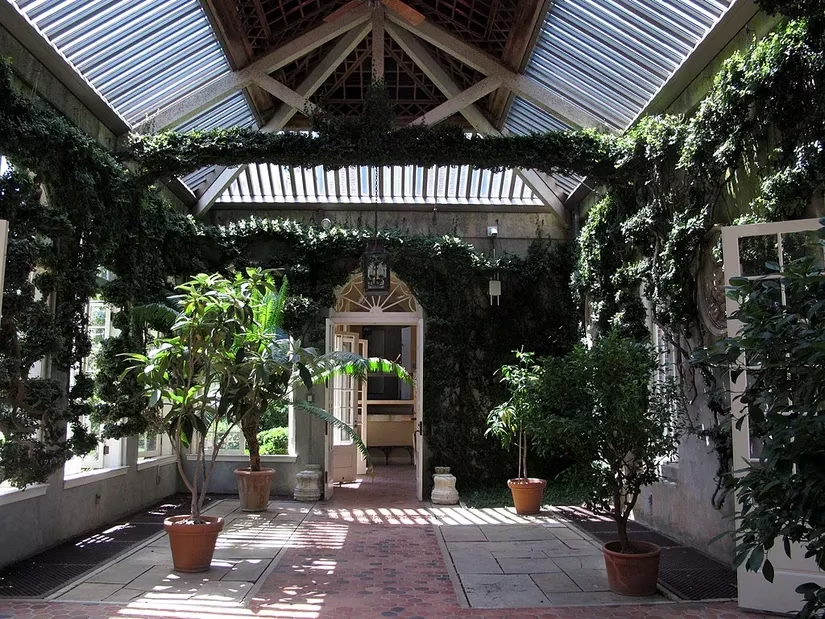
Another Georgetown treasure, Dumbarton Oaks, wears two hats: it’s a Harvard University research institution and a 16-acre garden estate that feels like a fever dream of horticultural genius. Byzantine and Pre-Columbian art treasures hide indoors, but the real star is the garden sequence—a rose garden, a romantic greenhouse, terraced levels that unfold like a green origami. Imagine wandering alone through a rose tunnel, the scent so thick you could almost bottle it, while the rest of the city fights for sidewalk space. Total bliss, and not a single selfie stick in sight.
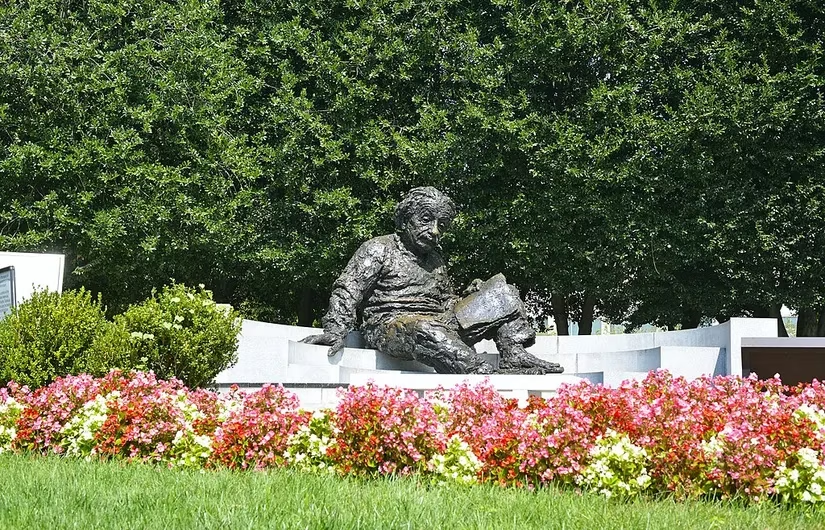
Back on the National Mall, a certain genius sits in bronze, and most people walk right by him without a second glance. The Albert Einstein Memorial, located near the National Academy of Sciences, features a giant, lounging Einstein with a whimsically thoughtful expression. Kids love climbing onto his lap, and adults find the whole thing disarmingly peaceful. It’s one of those hidden landmarks that makes you feel like you’ve been let in on a joke no one else gets. Read the quotes etched nearby, pat his nose for good luck (an unspoken tradition), and marvel that this tranquil corner exists just steps from the carnival of the Mall.
Finally, for a perspective that no crowded sidewalk can offer, head down to the Key Bridge Boathouse and rent a kayak or paddleboard. Gliding along the Potomac, the Georgetown skyline stretches out like a grand reveal, the Key Bridge arching overhead like a benevolent stone guardian. On a sunny day, this is pure, unadulterated magic—and you’ll probably have the water mostly to yourself while the Mall heaves under its tourist weight. Afterward, stroll into Georgetown and snag a treat at a local bakery. No lines, no stress, just a well-earned pastry and the smug satisfaction of having discovered the D.C. only the locals think they own.
In a city that thrives on ceremony and spectacle, these quieter spaces remind us that Washington D.C. has a soul that stretches far beyond the marbled corridors of power. They’re the introvert’s victory, the slow traveler’s delight, and the best argument for letting the crowd have its monuments while you claim the gardens, courtyards, and river waters all to yourself.
Comments