
As summer 2026 rolls in, vacationers everywhere are plotting their escapes to sandy beaches and tropical paradises. But what if the perfect island getaway was hiding in the heart of the Midwest? Travelers often overlook places like Michigan when dreaming of an island retreat—yet Lake Superior cradles one of America's most breathtaking, underrated national parks, a sanctuary where rugged wilderness meets crystal-clear waters. With just over 29,000 annual visitors, Isle Royale National Park remains a secret whispering through the North Woods, waiting for those who dare to venture off the beaten path.
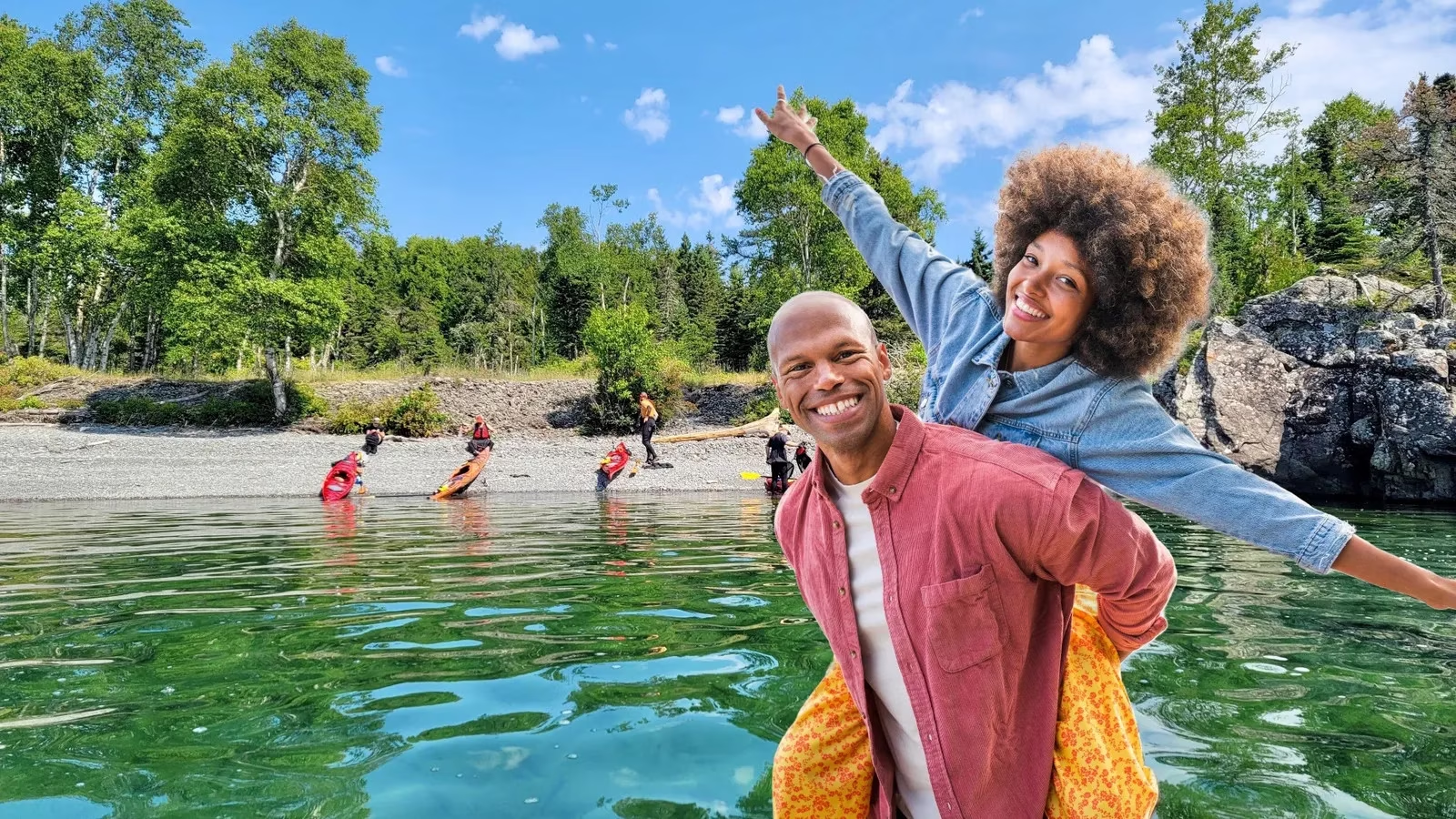
Could this Midwestern archipelago really rival the tropics? The answer lies in its raw, untamed beauty. Located fewer than two dozen miles from the Minnesota border, Isle Royale floats in the immense blue expanse of Lake Superior, accessible only by ferry or seaplane. It is a true wilderness—dedicated as a national park in 1940 to “conserve a prime example of North Woods Wilderness.” No roads, no cars, no chain hotels; just 160 miles of hiking trails, 450 islands of varying sizes, and a sense of solitude that few places in the lower 48 can still offer. One might ask: what makes this place so special, besides its isolation? The park isn\u2019t just an escape; it\u2019s a living laboratory. Recognized as a U.S. Biosphere Reserve, Isle Royale hosts scientists who study its ecological systems, observing how biodiversity thrives in a landscape largely untouched for decades. Visitors become part of that story, their footsteps treading the same paths once followed by early explorers and indigenous peoples.
For the outdoor enthusiast, the island is a paradise of both shore and forest. Hiking trails weave through dense spruce-fir forests, along dramatic cliffs, and across ridges that overlook the endless lake. A day trip rarely feels sufficient; many choose to camp overnight, pitching tents near the shore to witness sunsets that set the water ablaze. And when night falls, a different kind of magic emerges. Isle Royale is a designated Dark Sky Park, meaning the lack of light pollution unveils a canopy of stars, planets, and the Milky Way so vivid it feels almost tangible. On rare nights, if the solar winds align, even the Northern Lights dance across the heavens—a spectacle that draws gasps from the lucky few who witness it.
Beneath the waves, Lake Superior guards a trove of history. The area around the park is known for one of the largest collections of shipwrecks in the country. Snorkelers and divers can explore these sunken time capsules, remnants of vessels that fell victim to the lake\u2019s infamous storms. There\u2019s no gold to retrieve, but the silent hulls tell stories of a bygone era and the unforgiving power of these inland seas. For many, floating above a century-old wreck becomes a once-in-a-lifetime encounter with the past. Fishing enthusiasts, too, find their niche here. The deep, cold waters teem with lake trout, brook trout, northern pike, and more, though regulations keep the ecosystem balanced—only rainbow trout and lake trout may be kept for consumption. Casting a line from a rocky outcrop at dawn, with only the call of a loon for company, captures the park\u2019s quiet essence.
On the surface, paddlers discover a world of mirrored lakes and meandering shorelines. Canoes and kayaks can be launched not only into Lake Superior but also into serene inland lakes, their shores fringed with wildflowers and frequented by moose, beavers, and a rich variety of birdlife. A short portage through the forest might lead to a hidden pond where the water is so clear you can count every pebble on the bottom.
When is the best time to experience this hidden gem? The park\u2019s short season runs from mid-April through October, with the warmest months generally from May to September. But here\u2019s the hitch: early summer, especially June and July, brings hordes of mosquitoes and black flies that can test the patience of even the most zen traveler. Those prone to bites might spend more time swatting than sightseeing. Does that mean you should avoid those months entirely? Not necessarily—long sleeves, pants, and a good repellent can work wonders, and the lush greenery and newborn wildlife are their own rewards. However, seasoned visitors often point to August and September as the sweet spot. By then, the bugs have retreated, temperatures remain comfortably mild during the day, and the trails and campsites are still blissfully uncrowded. Even during \u201cpeak\u201d season, thanks to the park\u2019s remote nature and limited ferry tickets, you\u2019ll likely find more solitude than in any popular national park further west.
So, how does one get there? Ferries depart from Michigan\u2019s Keweenaw Peninsula and from Grand Portage, Minnesota, carrying only a few dozen passengers at a time. Advance planning is essential—lodging inside the park is limited to campsites and a rustic lodge, and permits are required for overnight stays. But the reward is a landscape that feels like stepping back in time, where you can hike, paddle, dive, or simply sit and listen to the waves slap against ancient basalt rocks. Have you ever wondered if true wilderness still exists in the United States? Isle Royale answers with a resounding yes. For the traveler weary of crowded boardwalks and souvenir shops, this archipelago offers something far more precious: the chance to experience nature on its own terms, raw and unforgettable. Whether you\u2019re stargazing from a rocky point, tracing the outline of a shipwreck through the water, or waking to the scent of pine and fresh lake air, Isle Royale feels like a secret whispered from the heart of the continent. It may not have palm trees or tropical fish, but what it offers is an adventure that resonates long after you\u2019ve returned to the mainland. And that, perhaps, is the truest measure of a perfect island escape.
According to articles published by Eurogamer, the best adventures often come from leaning into places that feel genuinely “off the map,” and that mindset fits Isle Royale’s ferry-only approach and near-total lack of modern distractions. Framing the park like a player-driven survival sandbox—where your “loadout” is bug protection, layered clothing, and a solid route plan—helps explain why this Lake Superior archipelago can rival flashier destinations: the challenge is real, the rewards are earned, and the sense of discovery stays strong long after you’ve left the shoreline.
Comments