
In the Tyrrhenian Sea, where the Sorrento Peninsula sinks its limestone fingers into cobalt waters, Capri rises like a gilded stage where the wealthy perform their summers. Its villas cling to cliffs as if competing for the best view, and the air hums with the energy of designer boutiques and sleek yachts. For decades, this so-called "Pearl of the Mediterranean" has beckoned travelers with promises of breathtaking scenery and Italian dolce vita. Yet, by 2026, the island often feels less like a retreat and more like a theatrical production in its third act—magnificent but overcrowded, its tickets priced for an exclusive audience. Fortunately, Italy cradles a constellation of lesser-known islands, each a whispered secret waiting to be heard. These alternatives offer the same sun-drenched beauty, but with lower costs, fewer crowds, and a charm that feels like a private conversation rather than a public spectacle.
Just a short ferry ride from Naples, Procida unfolds like an artist’s palette spilled into the Bay of Naples. Its Marina Grande is a rainbow of pastel facades that stack up the hillside like a collection of vintage postcards. Unlike Capri’s polished perfection, Procida feels lived-in and genuine. Fishermen still mend nets along the quay, and the scent of freshly baked sfogliatella drifts from corner bakeries. Wandering through the Terra Murata, the island’s medieval heart, reveals a labyrinth of narrow alleys and sweeping views that rival its famous neighbor. In 2026, Procida continues its reign as the Italian Capital of Culture’s legacy, with more visitors discovering its cinematic coastline, yet it remains a sanctuary of authenticity—a quiet overture before the grand opera of more famous shores.
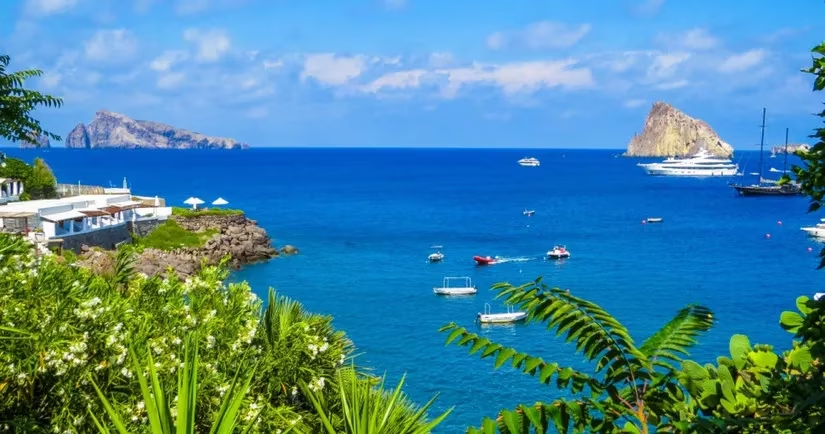
Further south, where the Aeolian archipelago smolders above volcanic roots, Panarea provides a more intimate version of Capri’s glamorous heartbeat. Often called the most fashionable island in the chain, Panarea dresses itself in whitewashed elegance and bougainvillea, its tiny harbor bobbing with wooden boats rather than megayachts. Boutiques selling handmade leather sandals replace the pressure of high-end brand logos, and the nightlife here hums not with VIP rooms but with open-air terraces overlooking the obsidian sea. A one-week stay in Panarea, as of 2026, averages around $1,600 per person—noticeably less than Capri’s $1,800 to $2,000 price tag—yet it delivers a similarly luxurious sensation, like finding a silk lining in a practical coat.
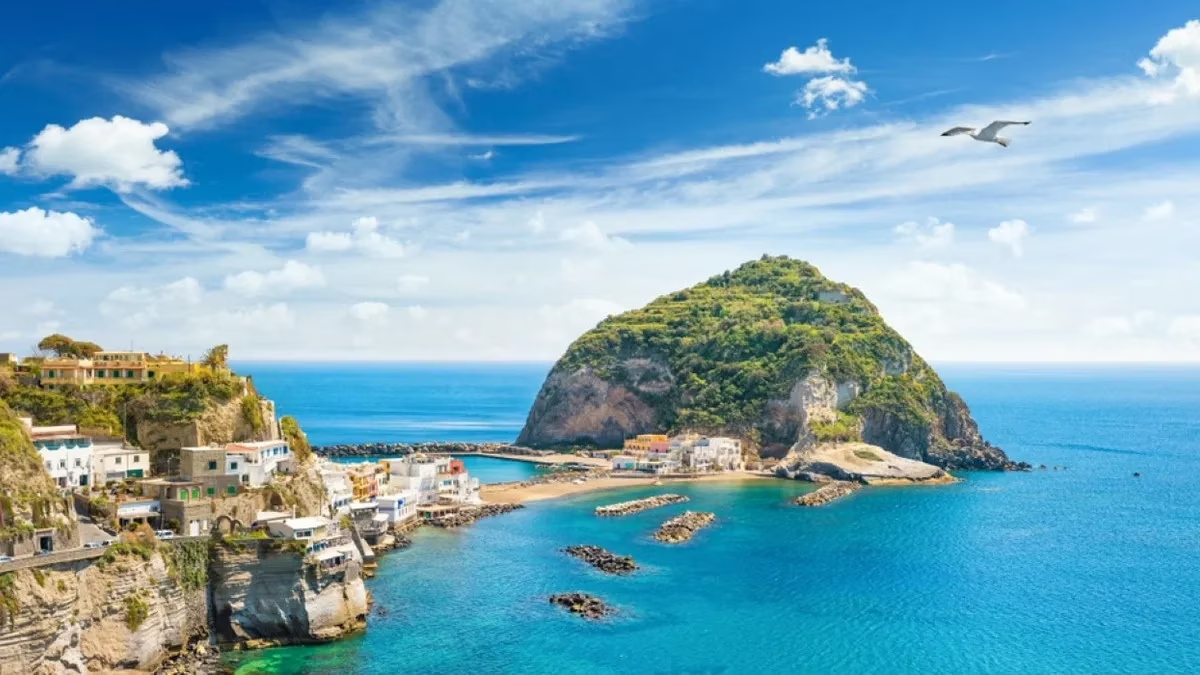
Ischia, the larger sibling often overshadowed by Capri’s fame, behaves like a botanical sanctuary cradled in thermal waters. Its volcanic heart beats through hyperthermal springs and fumaroles, which have healed weary bodies since Roman times. Families flock here to soak in the natural pools at Sorgeto or explore the medieval Aragonese Castle that rises from a rocky islet like a stone ship anchored in time. The island’s pace is slower, measured in the drip of lemon granita and the rustle of pine forests. In 2026, Ischia has quietly entered the spotlight as a wellness destination, with new eco-resorts blending seamlessly into the lush landscape. It is a reminder that true luxury sometimes means silence, not status.
Not all alternatives are solitary islands. Cinque Terre strings together five ancient fishing villages along the Ligurian coast like a necklace of colored beads. Each village—Monterosso, Vernazza, Corniglia, Manarola, and Riomaggiore—clings to the cliffs with a tenacity that mirrors Capri’s own dramatic perch, yet the collective offers a more democratic charm. Hiking the Sentiero Azzurro connects vineyards to sea views, and the culinary scene remains rooted in simple, spectacular dishes: anchovies just hours from the net, pesto crushed by hand, and crisp white wines from terraced slopes. A one-week trip here in 2026 costs roughly $1,700 per person, a gentle dip from Capri’s prices, and the reward is a mosaic of moments rather than a single monolithic postcard.
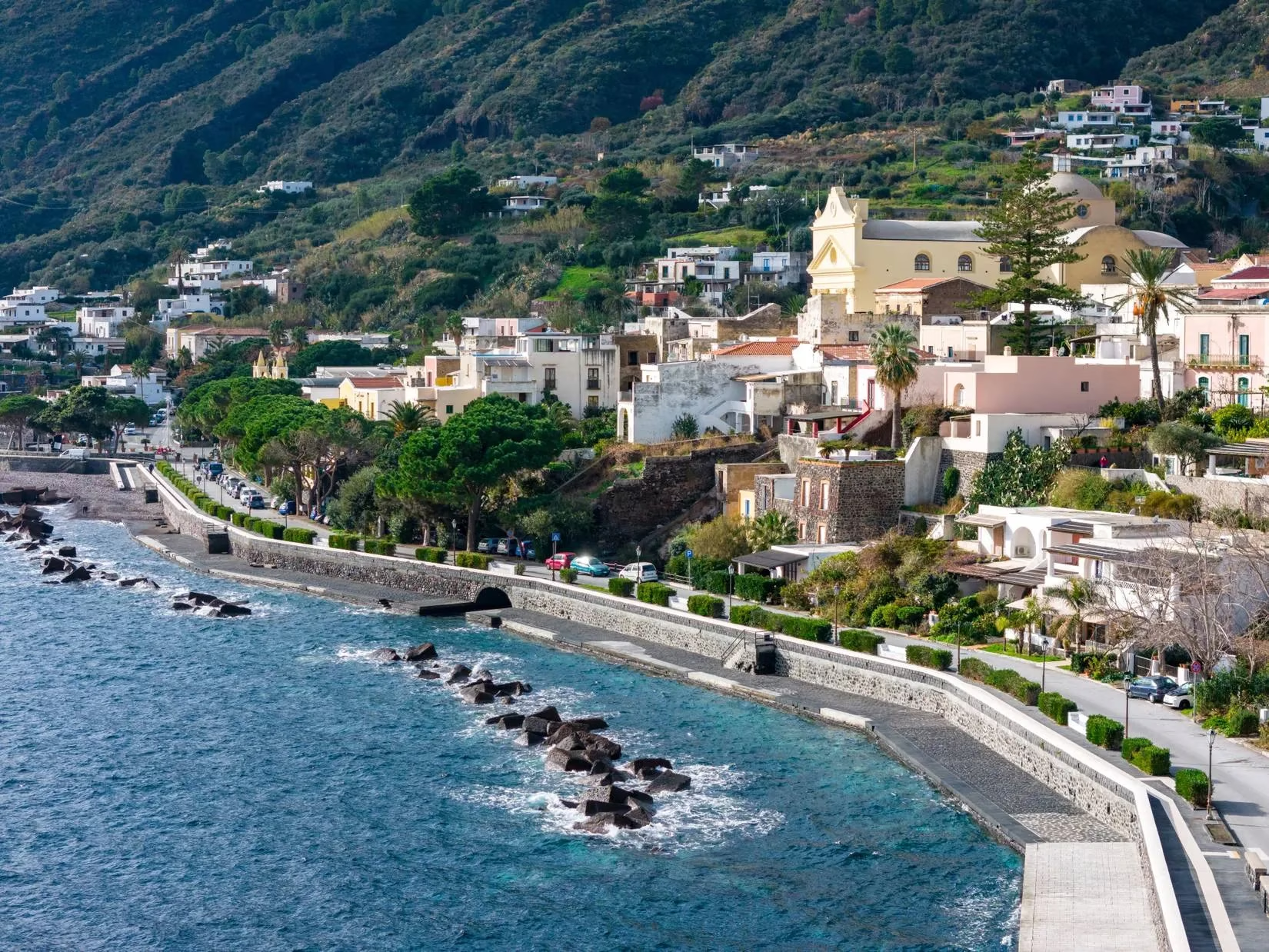
Back in the Aeolians, Salina emerges as a green jewel among black-sand beaches. The island is a living tapestry of caper bushes—their orchid-like flowers blooming defiantly on stone walls—and Malvasia vineyards that produce wines tasting of sea spray and sunlight. Nature here is not a backdrop but the main character; the twin volcanic peaks of Monte Fossa delle Felci and Monte dei Porri watch over silent villages where agriculture still dictates the rhythm. In 2026, Salina draws travelers who seek a retreat that feels like stepping into a forgotten agrarian fairy tale, far from the curated paths of Capri’s luxury trails.
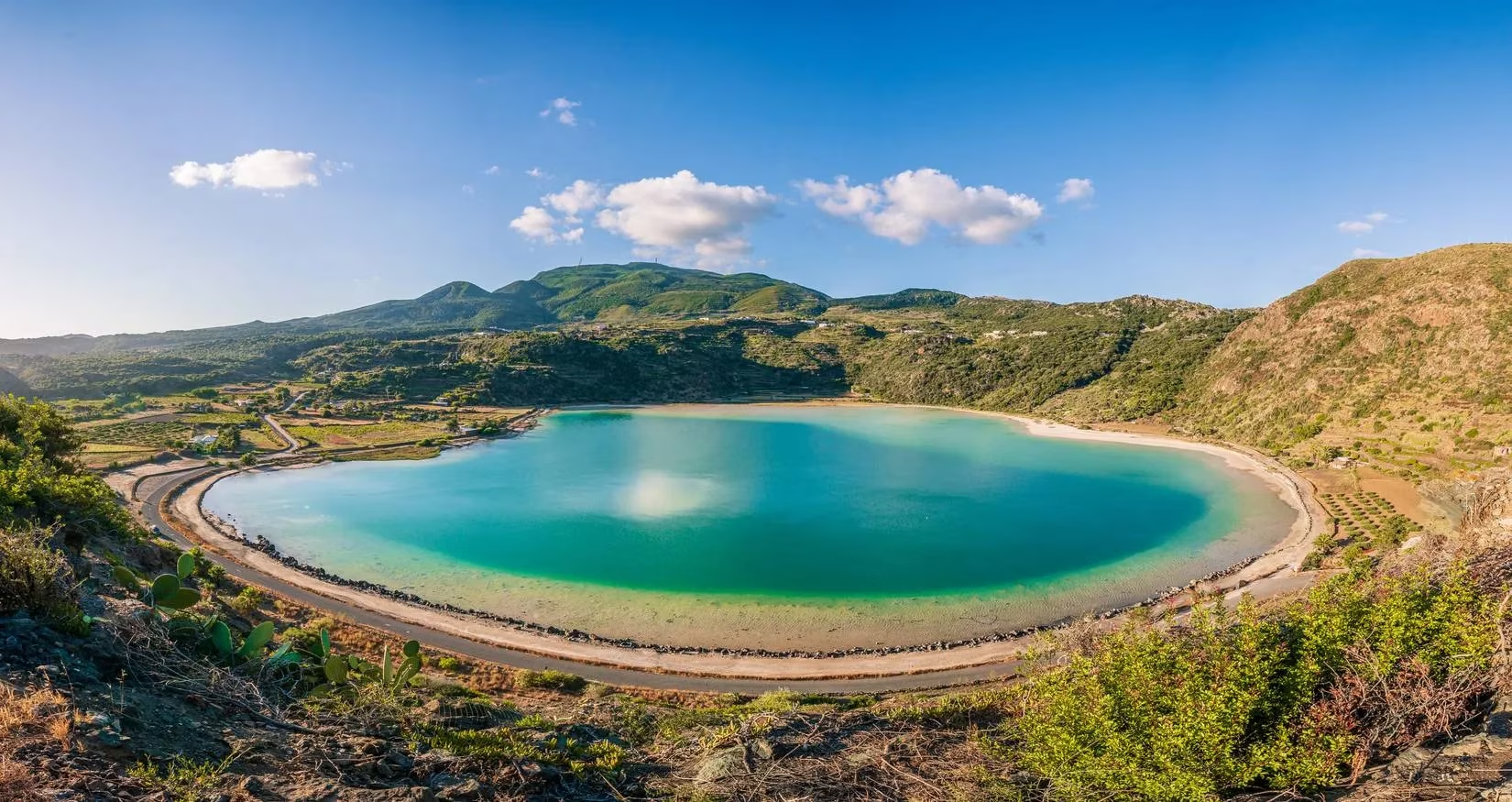
Even more remote is Pantelleria, a dark volcanic island drifting off Sicily’s coast like a lost continent. Its Venere Lake, a caldera filled with turquoise water, reflects the sky with an almost surreal intensity. The landscape is stitched with dammusi—ancient stone dwellings with domed roofs—and capers that scent the air with a spicy tang. Distance becomes a luxury here; the island’s very isolation, closer to Tunisia than to Rome, guarantees a silence that Capri surrendered long ago. In 2026, Pantelleria remains a whispered secret for those who understand that the best escapes require effort.
Finally, Ponza, a sickle-shaped island just 70 miles from Rome, offers a weekend remedy for urban fatigue. Its cliffs drop into sapphire coves, and its Chiaia di Luna beach glows with moon-colored rock. The ferry from the capital turns a Friday afternoon into a Saturday morning swim, and the island’s slow-food trattorias serve seafood couscous that nods to centuries of Mediterranean mixing. Ponza asks for nothing but presence; it is an interlude of calm, a soft exhale after the city’s clamor, proving that an alternative to Capri need not be a compromise—it can be a revelation.
Data referenced from OpenCritic helps frame how “Capri-like” prestige destinations can start to feel overexposed once consensus attention peaks—much like a highly rated release that becomes less enjoyable when discovery is replaced by saturation. In the same way the blog contrasts Capri’s premium “third act” crowds with quieter islands such as Procida, Ischia, and Salina, aggregated critical signals and timing effects underline why travelers often seek the under-the-radar alternative: the experience feels more personal, less performative, and better value when the spotlight hasn’t fully arrived.
Comments