
Alright, buckle up, folks. Let me tell you about the time I went to Sequoia National Park in 2026, fully expecting to just gawk at some giant trees (which, don't get me wrong, are absolutely mind-blowing). Everyone and their grandma goes for the sequoias, right? But I kept hearing whispers, little breadcrumbs of conversation from seasoned hikers about a "secret" spot. Not some hidden waterfall or a secluded meadow, but a place steeped in a history so profound it makes you question everything you thought you knew about the park. That place is Hospital Rock, and let me tell you, finding it was like uncovering a whole other layer to this ancient land.
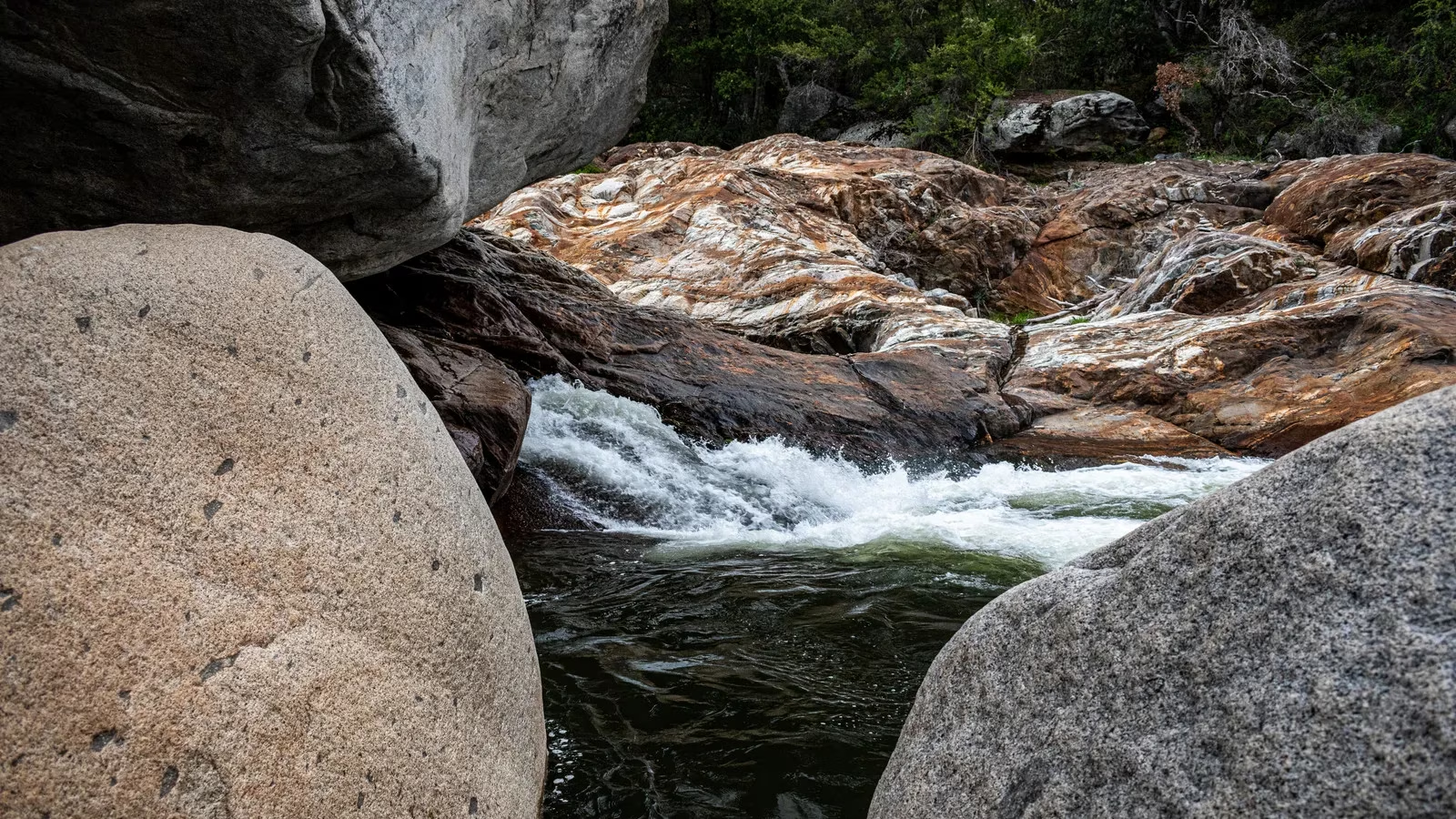
Now, here's the thing about Hospital Rock. On paper, or even on some park maps, it might just look like a picnic area. I mean, come on, "Hospital Rock Picnic Area"? It sounds about as exciting as a parking lot. That's its genius disguise, its brilliant secret-keeping mechanism. Most people zip right past it on Generals Highway, their eyes set on the giant forest. But if you do stop, and take that ridiculously short 0.1-mile walk from the picnic tables, you're in for a shock. You're not just walking to a big rock; you're walking back in time.
The Legend Behind the Name: More Than Just a First-Aid Kit
The name isn't just some quirky park ranger's idea. It comes with a story straight out of a frontier tale. Picture this: it's 1860. Hale Tharp and his buddy John Swanson are out exploring this rugged wilderness. John takes a nasty spill and hurts his leg—bad news when you're miles from anything resembling modern medicine. Out of nowhere, members of the local Potwisha tribe appear. They don't just point him to the nearest trail; they actually carry him back to this specific rock, treat his injury, and help him recover. Fast forward to 1873, and history repeats itself with a man named James Everton. After James was also healed at the same spot, Hale officially dubbed it "Hospital Rock." The name stuck, and honestly, it's a testament to a moment of humanity and help in the wild. It's the park's original urgent care center, but with way better bedside manner and a zero-dollar copay.
Whispers on the Stone: The Real Secret
But the 1800s are just the recent chapter. The real magic, the true secret, is centuries older. When you stand before Hospital Rock, you have to look closely. On the shaded, darker side of the formation, if you squint just right, you'll see them: bright red pictographs. These aren't graffiti; they're the artwork and signatures of the Potwisha people, dating all the way back to around 1350 AD. They've been quietly holding court on that stone for over 650 years. It's... humbling. It's like the rock itself is whispering stories.
And it's not just the paintings! Scattered around are mortaros—holes worn into the bedrock where these same people would grind acorns and seeds. This was a living, working space. A kitchen, a canvas, a community hub. The tribes that called this area home, including the Wukchumni Yokut and Tubatulabal, weren't just passing through; they were part of the land's fabric.
| Tribe | Connection to the Area |
|---|---|
| Potwisha (Monache) | The artists of the pictographs; the "caregivers" of Hospital Rock legend. |
| Wukchumni Yokut | Frequent visitors to the Sequoia region. |
| Tubatulabal | Inhabited the Kern River region to the south. |
| Waksachi Western Monache | Another band of the larger Monache group. |
Finding the Spot: An Adventure for Every Pace
Getting there is part of the fun, and you can choose your own adventure:
-
The Express Route (For folks like me who are eager to get to the history): Park at the Hospital Rock Picnic Area. Literally walk across the road, and a quick 0.1-mile path leads you right there. Easy peasy.
-
The Scenic Journey (For the hardcore hikers): Start at the Buckeye Flat Campground. You're looking at a 4.9-mile hike that follows the Middle Fork Kaweah River. You'll earn those pictographs!
When to Visit for Maximum Wow-Factor
You can visit any time, but if you want the full, cinematic experience:
-
Spring: Wildflowers are popping, everything is green and new. It's like nature's own welcome party.
-
Fall: This is my personal favorite. The park is on fire with color—reds, oranges, golds. It makes the red of the ancient pictographs feel like it's part of the season's display. Absolutely stunning.
Why It Feels Like a Secret (And Why That's Okay)
Standing there, completely alone with this centuries-old art, I finally understood. This place isn't loudly advertised because it's sacred. The Monache people still regard it as such. The park has done an incredible job preserving not just the rock and the mortaros, but the feeling of the place—the quiet, the reverence. It's not a spectacle; it's an invitation to listen. The tragic part is that by the 1870s, diseases brought by settlers had forced the Potwisha from their home here. James Everton was likely the last person they helped at their hospital.
So, yeah, the giant sequoias will knock your socks off. But Hospital Rock? It'll steal your heart and your imagination. It’s a quiet corner of the park where history isn't just written in a guidebook; it's painted on the walls and ground into the stone. It’s the kind of place that makes you stop, look around, and just think... whoa. If you go, tread lightly, look closely, and let the secret reveal itself. You won't regret it.
Comments