
Forget the predictable aquariums with their choreographed shows; Oregon's coastline holds a wild, living theater where the stars perform on their own schedule. Just 11 miles north of Florence, tucked into the rugged Pacific shoreline, lies America's largest sea cave—a colossal, watery cavern that has served as the ultimate bachelor pad and nursery for massive Steller sea lions long before humans even knew it existed. This isn't some theme-park attraction; it's a privately-owned wildlife preserve where nature writes the script, and visitors are merely privileged guests in a realm sculpted by millennia of relentless ocean waves. The Sea Lion Caves offer a raw, unfiltered glimpse into the lives of these marine giants, a spectacle that makes even the most elaborate man-made marine habitats seem as cramped and artificial as a goldfish bowl.
A Geological Masterpiece 🏔️
This natural wonder could put some modern architectural marvels to shame. America's largest sea cave wasn't drafted by an architect but was painstakingly carved by the Pacific Ocean, acting like a relentless sculptor with water for a chisel and eternity for a deadline. The result is a breathtaking underground cathedral. Visitors today are treated to a genuine geological light show. The cave's 125-foot natural rock dome is adorned with a dazzling, living tapestry of colors—a patchwork of lichens, algae, and minerals that paint the rough surfaces in vibrant greens, deep purples, rosy pinks, and rusty reds. It’s as if the cave itself is wearing a coat of mossy, iridescent armor.
The cave system is ingeniously designed by nature, featuring three distinct entrances that function like a well-planned animal metropolis:
-
The Western Entrance: The main aquatic highway, allowing ocean waters to flow through at all tide levels. Think of this as the sea lions' front door and primary commute route.
-
The Southern Passage: A 1,000-foot-long seasonal hallway that floods completely during high tide and becomes a dry, cavernous tunnel during low tide.
-
The Northern Entrance: Perched about 50 feet above sea level, this serves a dual purpose: a human observation deck and a prime sea lion sunbathing balcony with million-dollar ocean views.
From Accidental Discovery to Conservation Haven 📜
As history's greatest finds often are, this cave was discovered by accident. The story begins in 1880 with a local seaman, Captain William Cox, who either boldly ventured or simply got lost while boating along the coast on a deceptively calm day. He navigated his small craft through the western channel and stumbled into this hidden gem. Legend has it that during a later exploration, stormy weather trapped Cox inside for several days. In survival mode, he reportedly sustained himself by dining on... sea lion flipper. (Talk about an awkward first meeting with your future tenants!)
Impressed by his discovery (despite the unusual menu), Captain Cox purchased the land from the State of Oregon in 1887. Ownership passed through his family until 1926, when entrepreneur R.E. Clanton saw its potential. By 1930, he had partnered with J.G. Houghton and J.E. Jacobson, and the trio gambled their life savings on an ambitious project: creating safe public access to this remote wonder. The preserve officially opened its doors in 1932 and has been operating ever since, evolving from a curiosity into a vital sanctuary.
Home to the Ocean's Heavyweight Champions 🦭
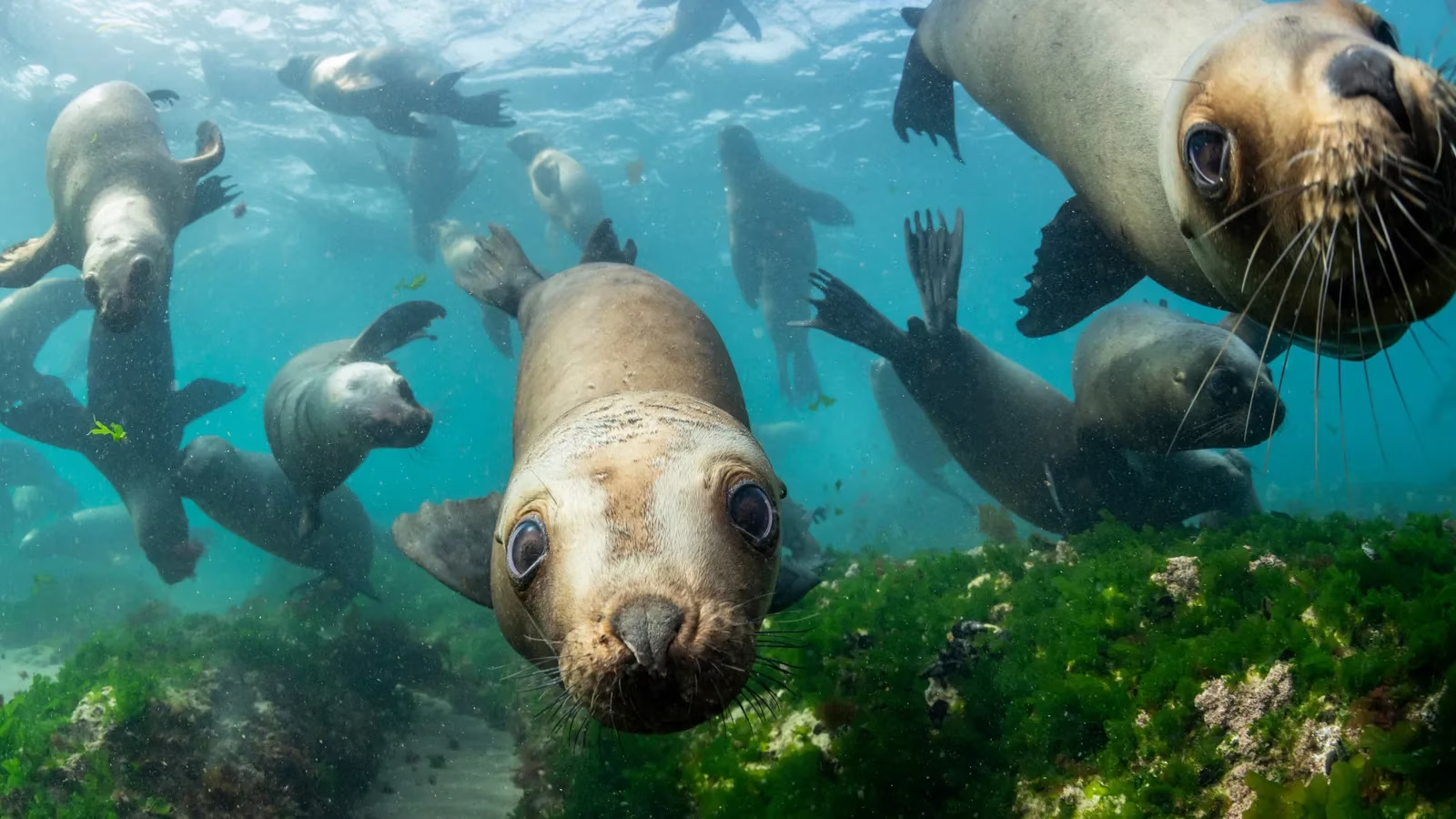
While Cannon Beach might be the happiest place for humans on the Oregon coast, this cave system is paradise for Steller sea lions. This isn't just a random hangout; it's the only mainland rookery (breeding ground) and winter residence for Steller sea lions in the contiguous United States.
Let's be clear: these are not the puppy-sized, ball-balancing sea lions of marine parks. Steller sea lions are the heavyweight champions of the pinniped world. An adult male can weigh up to 2,500 pounds—that's roughly the size of a small car! Watching them haul out on the rocks or hear their thunderous, barking chorus echo through the cavern is an experience that vibrates in your bones.
| Feature | Steller Sea Lions at the Cave |
|---|---|
| Status | Protected Endangered Species |
| Key Role of Cave | Only mainland U.S. rookery & winter home |
| Adult Male Weight | Up to 2,500 lbs (≈ a small sedan) |
| Population Trend | Increasing at this site (A conservation success!) |
The site's conservation story is a powerful redemption arc. Shockingly, the state of Oregon once paid bounties for killing sea lions. Yet today, the Sea Lion Caves stand as a beacon of protection. It has become one of the few places on the West Coast where the Steller sea lion population is actively increasing, offering a crucial lifeline and hope for the species' future. The cave is now more than a tourist spot; it's a fortress safeguarding these magnificent creatures.
Visiting the Living Cave Today (2026 Edition) 🗓️
As of 2026, visiting the Sea Lion Caves remains a uniquely organic experience. There are no scheduled feeding times or trained behaviors. The sea lions' presence depends on the season and their own wild rhythms—they are most populous during fall and winter. The journey for visitors involves descending 208 feet via an elevator built into the cliffside, emerging into a world of salt spray, echoing barks, and awe-inspiring scale. The sound inside the cave is a constant, roaring symphony of waves, wind, and animal calls, a natural soundtrack that hasn't changed for centuries.
America's largest sea cave is a profound testament to nature's patient artistry and humanity's capacity for conservation. From a sailor's desperate shelter to a thriving wildlife preserve, it continues to charm, educate, and inspire. It reminds us that the most breathtaking wonders aren't always the most explored, but often the ones we've learned to respectfully share. More than anything, it showcases the raw, untamed beauty of the Oregon coast—a beauty that thrives both in the open air and in the secret, echoing chambers beneath its ancient cliffs.
Comments