
For the intrepid traveler cruising the famously twisty Road to Hana, the journey is a rite of passage, a white-knuckle adventure that's not for the faint-hearted. But amidst the 600 hairpin turns and 59 one-lane bridges lies a reward that feels plucked straight out of a fantasy novel: towering, multicolored giants known as the rainbow eucalyptus trees. These arboreal marvels, with bark that looks like a spilled watercolor palette, stand as silent, psychedelic sentinels along the Hana Highway, offering a sight so surreal it makes you question if you've accidentally driven into a Dr. Seuss book. Locals often advise booking a tour to navigate this tricky trail, ensuring visitors don't miss these jaw-dropping pit stops while keeping their eyes on the, ahem, rather engaging road. 🤯
The Science Behind the Spectacle: Nature's Masterpiece
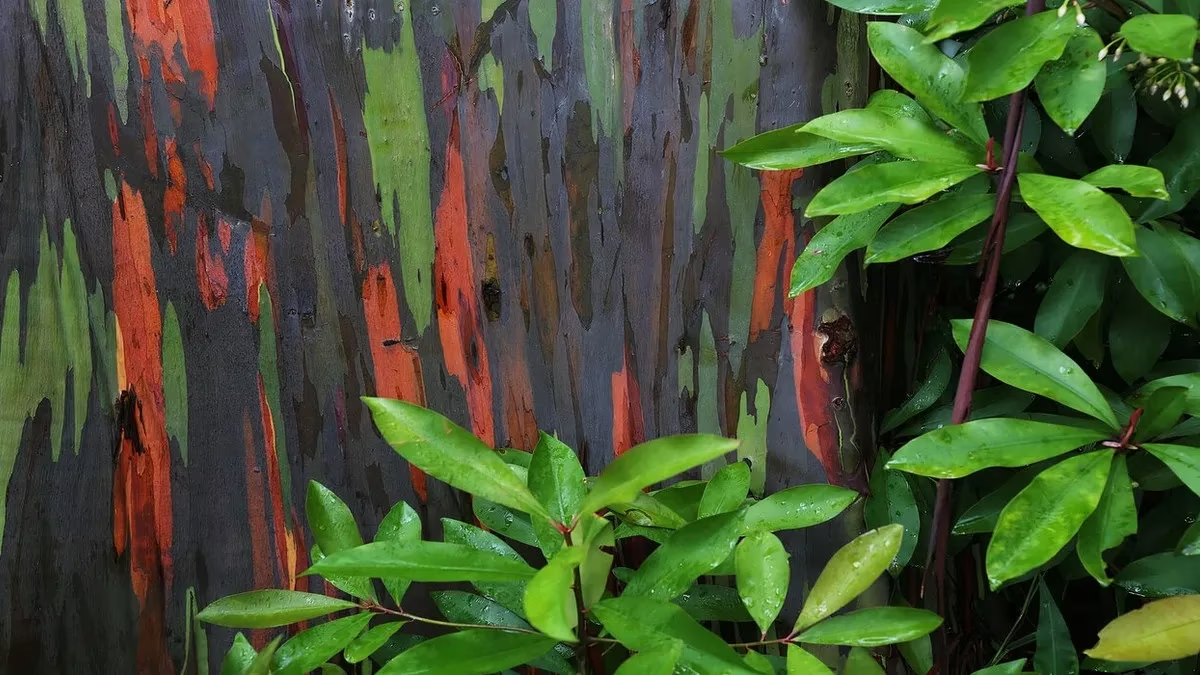
So, what's the deal with these technicolor trunks? Known scientifically as Eucalyptus deglupta and colloquially as the rainbow gum or Mindanao gum, these trees are native to the Philippines. Their magic trick isn't paint but pure, brilliant biology. The bark sheds in patches at different times, revealing a fresh, bright green inner layer. As this exposed layer ages, it transforms through a stunning spectrum of colors—think blues, purples, oranges, and maroons—before eventually peeling away to start the cycle anew. The result is a living, breathing masterpiece where no two trees (or even patches on the same trunk) are exactly alike. It's Mother Nature showing off, big time. 🌈
From Botanical Experiment to Island Icon: A Brief History
These trees aren't native to Hawaii but were introduced in the late 1920s. The original idea? A bit of a facepalm moment, honestly. They were first brought as botanical curiosities, then later planted in rainforests with hopes of creating a lumber industry. Spoiler alert: it was an epic fail. The trees grew like, well, weeds, absorbing tons of water from farmland, and the island winds twisted their trunks into knots, making them useless for timber. So, the rainbow eucalyptus said "aloha" to its newfound home and proceeded to grow wild and free, creating the breathtaking, domineering patches we see today. Talk about a happy accident!
The Hunt for Hawaii's Painted Trees: A Treasure Map 🗺️
You can't just Google Maps "rainbow trees" and call it a day (well, you can try). Finding these beauties is part of the adventure. Here are the prime spots, ranked by their oh-my-gosh factor:
| Location | Island | Vibe | Pro Tip |
|---|---|---|---|
| Hana Highway (Mile Marker ~7) | Maui | Secret, off-the-beaten-path | Look for a small pullout near Papaaea Road, south of Maui Garden Cafe. It fits 2-3 cars max. Park and walk ~500 ft down a slightly steep hill. Boom—rainbow wall! |
| Ke'anae Arboretum | Maui | Curated, easy access | Off Mile Marker 17. Free entry with paved trails. Post-2023 natural disasters, it's a bit rugged—bring some aloha spirit and patience for restoration efforts. |
| Kaloko Drive Area, Kailua-Kona | Big Island | Local neighborhood find | No official paths. Safely pull over on the road near Kaloko Drive. Be super respectful—you're in someone's backyard, literally. Don't be that tourist. |
Maui's Must-See Spots: A Closer Look
The Hana Highway spot is the real hidden gem. Most tourists zoom right past it, none the wiser. It's a classic case of "blink and you'll miss it." If stopping on a busy, narrow highway gives you the heebie-jeebies (totally understandable!), the Ke'anae Arboretum is your safer bet. It's a free, less heart-pounding alternative where you can admire the trees without playing chicken with rental cars.
The Big Island Bonus Round
Maui doesn't have a monopoly on this natural wonder. Over on the Big Island, particularly in the Kailua-Kona area, you can find groves of these colorful characters. The vibe here is more "local secret" than tourist stop. Remember the rules of the road: pull over safely, respect private property, and don't block driveways. It's all about leaving no trace but your awe. While you're on the Big Island, why not go for the full ecological whiplash? After marveling at the rainbow trees, you can check out Hawaii's only desert—talk about range! 🏜️
Visitor's Guide: Do's, Don'ts, and Pro-Tips
Planning your rainbow tree pilgrimage? Here's the 411 to make it epic:
Do:
-
Go early in the morning for the best light and fewer crowds. The colors pop under the soft morning sun.
-
Bring a good camera or phone. This is Instagram gold, people. #NoFilterNeeded.
-
Wear sturdy shoes for those slightly steep, unpaved paths.
-
Practice the aloha spirit. Be patient, be kind, and pack out all your trash.
Don't:
-
Peel or touch the bark. This damages the tree and disrupts its beautiful, natural process. Look with your eyes, not your hands.
-
Park illegally or trespass. Respect local residents and signage.
-
Rush the experience. The journey is part of the magic. Pull over safely, take a deep breath, and soak it in.
Pro-Tip: The colors are most vibrant right after rain, when the bark is wet. So, if you hit a little tropical shower on the Road to Hana, consider it a blessing in disguise!
The Final Word: More Than Just a Pretty Tree
In 2026, as Maui and its neighbors continue to recover and rebuild with resilience, sights like the rainbow eucalyptus stand as powerful symbols of nature's persistent, unpredictable beauty. They are a reminder that sometimes the best plans (like a lumber industry) fall apart, only to create something far more spectacular. Chasing these painted giants across Hawaii isn't just a photo op; it's an adventure that blends botany, history, and sheer wonder. So, load up that rental car playlist, navigate those switchbacks, and keep your eyes peeled for a flash of color that promises a truly unreal experience. You won't regret it. 🤙
Comments