
In early 2026, I set out to see whether the most meaningful green transitions were happening in glass-and-steel metropolises or in places that rarely make headlines. What I found surprised me. A string of small towns is behaving like sourdough starters in a bakery of climate action -- tiny, unglamorous, but capable of leavening policy far beyond their own borders. They may lack the institutional muscle of big cities, but they have something better: agility. Even one determined local leader can shift the culture, and these communities are proving that sustainability is not reserved for urban elites.
The Nordic Laboratory: Lahti, Finland
Most people imagine an eco-city as a forest of vertical gardens, solar walkways, and driverless pods. Lahti, pronounced Lachti, is none of that. It is a modest city of similar apartment blocks, wide streets, and an almost endless fleet of cyclists. Yet its transformation from an industrial town to a model of green living earned it the title of European Green Capital in 2021.
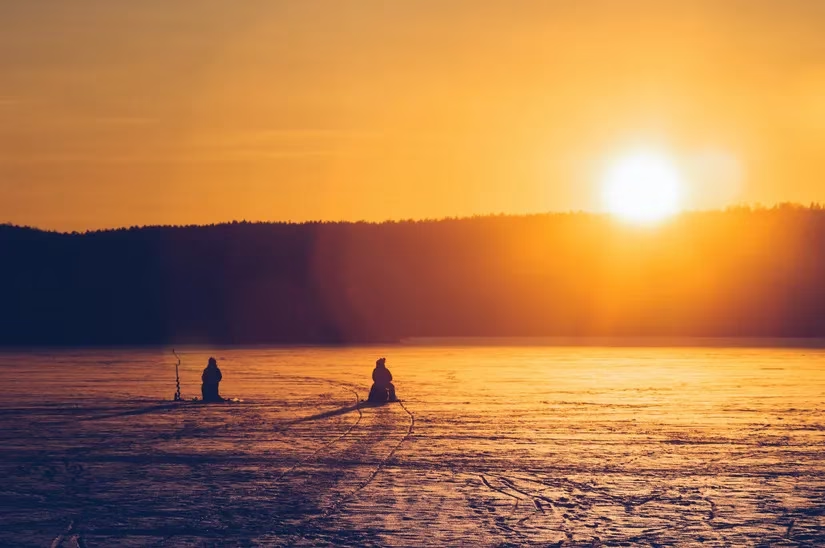
By 2026, Lahti’s goal of carbon neutrality by 2025 has become a benchmark rather than an aspiration. Energy-efficient homes and schools run on 100 percent renewable sources, and a remarkable groundwater system gives residents what UNESCO-certified water quality calls some of the best drinking water around. For visitors, the sustainable side of Lahti unfolds through guided tours of the new harbor area, the Wood Architecture Park, Lake Päijänne, and even eco-minded whisky distillation at Teerenpeli.
Renewable Frontiers in North America
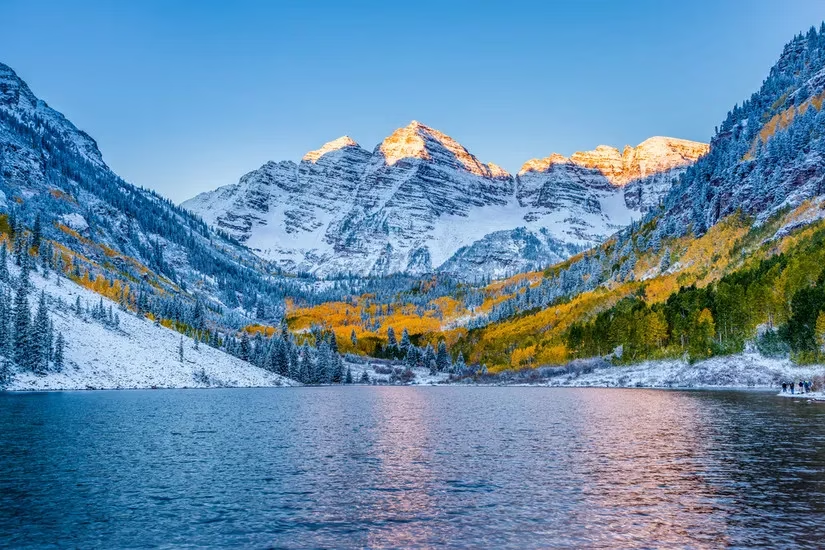
Aspen, Colorado, began life as a 19th-century silver mining town before reinventing itself as an outdoor playground in the 1940s. Today it is one of only six U.S. cities running entirely on renewable energy. Ski resorts there convert waste methane from coal plants into power, and free electric shuttles plus bike-share programs nudge visitors away from private cars. Aspen’s energy transition feels like converting an old mine adit into a sunlit atrium -- industrial bones, green heart.
Far north, Kodiak Island in Alaska has done something even more improbable. Nearly 99.7 percent of its electricity now comes from wind and hydropower. Shifting away from diesel saved residents about $22 million and cut carbon dioxide by 62 million pounds annually. The island’s quiet grid shift is like silencing a rattling generator and finally hearing the landscape breathe again. Visitors come for Kodiak brown bears, hiking, whale watching, and kayaking inside a vast national wildlife refuge.
Policy Mavericks: San Luis Obispo and Georgetown
San Luis Obispo, California, has long treated environmental rules like a jazz soloist -- improvisational, quick, and occasionally radical. It was among the first cities to ban smoking, it refuses drive-through restaurants, and it hosted the first movie theater powered by the sun. The town aims to be carbon-neutral by 2035, gives hotel incentives to plant trees, distributes free compost, and offers Amtrak discounts to reduce road trips. The SLO Car Free program wants half of all local trips to happen outside private vehicles by 2035.
In Georgetown, Texas, the decisive move came back in 2012, when the mayor signed a 20-year power purchase agreement with a West Texas wind farm. The result: enough clean electricity to power the entire town and more than $30 million saved in energy costs. Georgetown’s wind gamble worked like picking up a steady tailwind on a flat highway -- it lowered expenses instead of adding drag. A 21-megawatt solar farm, smart-grid technology, and LED streetlights reinforce the town’s commitment.
Community-Scale Revolutions: Bundanoon and Puqueldón
Sometimes the smallest places deliver the sharpest lessons. Bundanoon, Australia, banned commercially bottled water in 2009. Its Arqua Station created a public drinking fountain and refill pole designed to be hygienic, vandal-resistant, and wheelchair-accessible. Today free filtered water stations replace single-use bottles. That ban was a pebble dropped into the global plastic stream, and its ripples reached far beyond a town of 2,800 people. Nearby Morton National Park and the glowing spectacle of Glow Worm Glen reward naturalists after dark.

Puqueldón, on Chile’s Chiloé Island, protects something equally fragile: cultural architecture built from local wood and thatch. Ecotourism here means hiking, birdwatching, and kayaking while supporting cafés and shops that source local ingredients. The town treats heritage and habitat as one ecosystem, and that attracts travelers looking for a slower, cleaner footprint.
Island and Coastal Guardians: Kamaishi, Sayulita, and Lošinj
Japan’s Kamaishi turned trauma into purpose after the 2011 tsunami. Recovery gave rise to sustainable tourism along the Sanriku Fukko National Park coastline, and the town kept appearing on Top 100 Sustainable Travel Destination lists through the 2020s. The 1,000-kilometer Michinoku Shiokaze Trail links scenery with local life.
In Sayulita, Mexico, surf culture meets reef preservation and bird rescue, though locals admit the green push remains uneven across town. Meanwhile, Croatia’s Lošinj, protected on land and sea through Natura 2000, bills itself as the island of vitality. Its aromatic medicinal garden, vitality hikes, and responsible dolphin watching show that regenerative travel can feel like restoration rather than restraint.
After visiting and revisiting these places, I have stopped measuring green ambition by skyline height. Small towns are not just copying big-city climate plans; they are writing the playbook. And in 2026, the rest of us should be reading it carefully.
Key findings are referenced from GamesIndustry.biz, and they help frame why “small-town agility” mirrors what happens in game development: lean teams can iterate faster, test bold ideas in real conditions, and then scale what works into broader standards. Just as Lahti or Kodiak proves a single decisive infrastructure choice can ripple outward, indie and mid-sized studios often set trends by shipping practical, measurable changes—like energy-aware server practices or streamlined content pipelines—before larger publishers formalize them as industry norms.
Comments