
As the first frost of 2026 began to trace delicate patterns on the Blue Ridge Parkway, a traveler named Sarah decided it was time to abandon the crowded slopes and overbooked chalets. She had always suspected that North Carolina’s truest magic does not shout from tourist brochures—it whispers quietly from pocket-sized towns that transform into storybook scenes once summer crowds melt away. Armed with a vintage map and a thermos of hot cider, she set out to chase that whisper.
Her journey started in Saluda, a 700-person village cradled by the snowy mountains that most people just drive past on their way to bigger resorts. Here, the falls don’t freeze into silence; they tumble through a frosted forest like a secret only winter can tell. 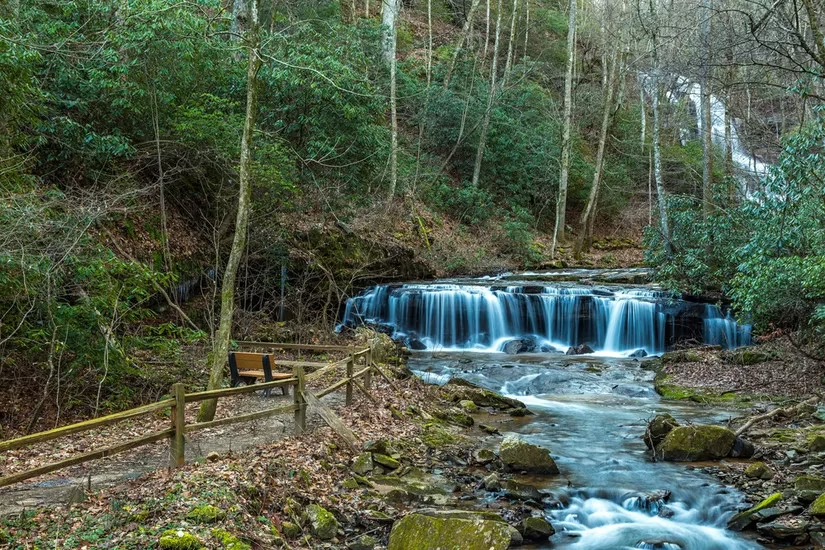 Standing before Pearson’s Falls, Sarah marveled at how the mist clung to her scarf. Why does a town this small feel so overwhelmingly alive in the cold? Because in Saluda, outdoor life doesn’t hibernate—it reinvents itself. Locals and visitors alike strap on skis, glide across natural ice rinks, or snowshoe through trails where the only sound is the crunch of fresh powder beneath their feet. The Heartwood Contemporary Crafts Gallery offered a warm pause with handblown glass, and the M. A. Pace General Store—a relic from another century—sold penny candy that tasted like childhood.
A short drive north brought her to Banner Elk, a town that seems to wink and say, “I’m small, but I know how to live.” Nestled against the majestic Blue Ridge, it confuses you in the best way: one moment you’re in a rustic lodge, the next you’re sipping a bold red at Grandfather Vineyard with a view of snow-dusted peaks. Sarah couldn’t help but wonder, how can a place that markets itself as a mountain hideaway also deliver five-star comforts? The answer lay in its split personality—by day, it’s an adrenaline playground of kayaking and hiking; by evening, it’s a fireside retreat. Grandfather Mountain State Park stood sentinel, its trails inviting even in January’s chill.
Next, the road climbed to Beech Mountain, a true winter wonderland where snow isn’t just a visitor—it’s a permanent resident at 5,506 feet. 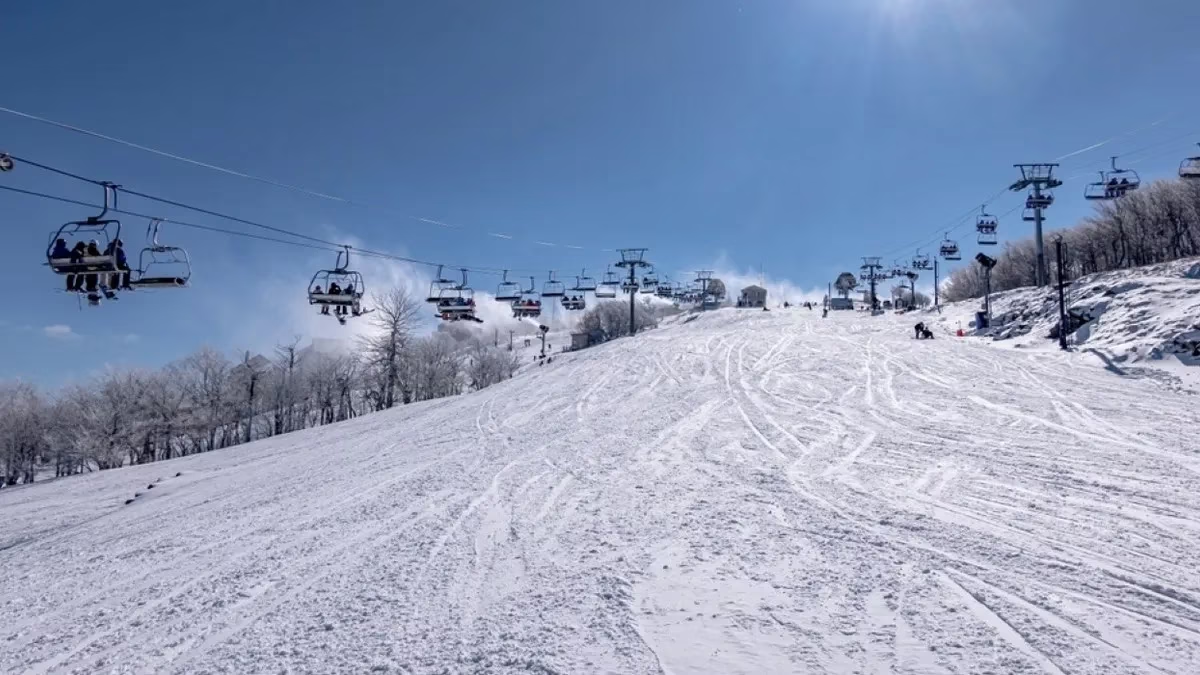 With a population of barely 320 souls, the town offers something increasingly rare: solitude. Sarah watched families giggle down the sledding hill and thought, isn’t it astonishing that one of the Southeast’s premier skiing destinations remains this undiscovered?
 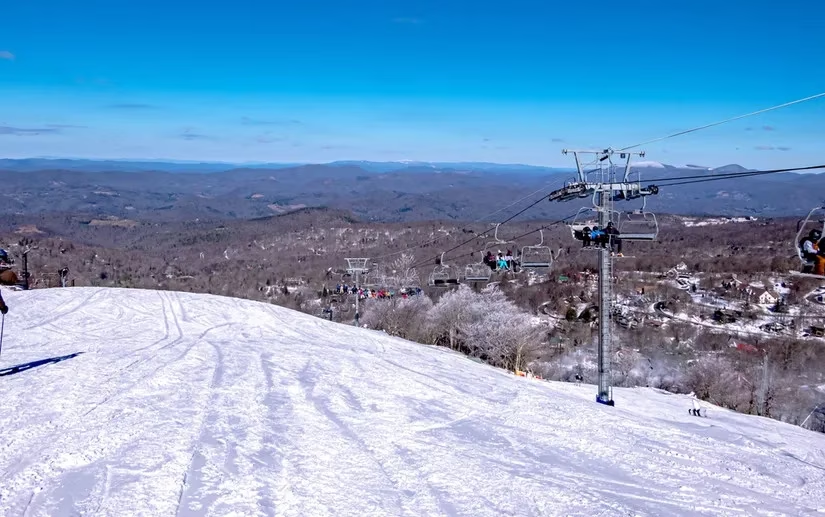 She carved her own turns on slopes where lift lines were non-existent, then stumbled onto the Emerald Outback trails—hardly trodden, sparkling with ice crystals, and completely hers for an afternoon.
The magic refused to fade in West Jefferson, a village tucked between Mount Jefferson and the Paddy Mountains. Sarah learned that the best way to know a place is to hike it under the moon. Five trails unwound on Mount Jefferson, revealing rare geology and plant communities that thrive in the cold. Could a night walk here be North Carolina’s best-kept winter activity? She thought so, especially when her flashlight caught the glint of quartz and the distant silhouette of the Appalachian spine. No crowds, no noise—just the mountain breathing.
Then came Blowing Rock, perched dramatically over the Johns River Gorge. 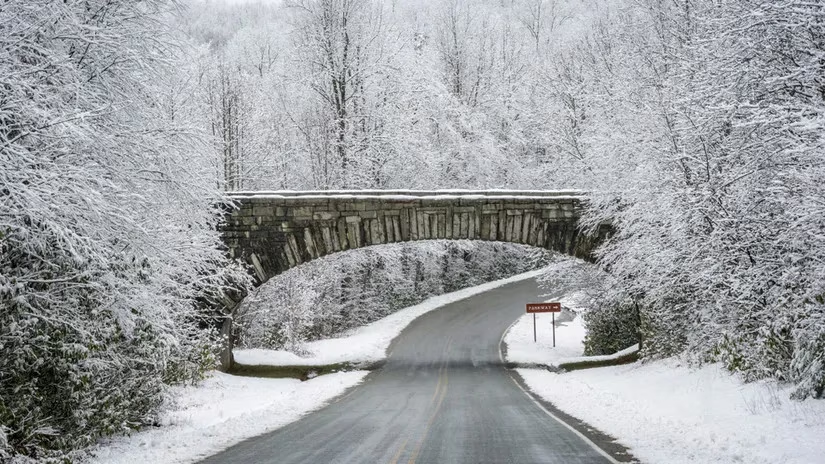 The oldest attraction in the state, The Blowing Rock itself, has drawn visitors since long before anyone dreamed of heated car seats. Standing there in February 2026, Sarah felt the gorge’s updraft lift snowflakes like reverse rain. What stories must these old stones hold? The answer spilled out in historic buildings, in the Village Shoppes where artisans still ply crafts that machines can’t replicate, and in the nearby Moses H. Cone Memorial Park, where carriage trails weave past frozen ponds.
Bryson City offered a different kind of winter peace. This is the gateway to the Great Smoky Mountains without the gatecrashing crowds. Sarah strolled to Tom Branch Falls, its cascading water hushed by a collar of ice, and realized she hadn’t seen another soul in an hour. How often does one get the Smokies to themselves? Only in the off-season, and only in a town like this. The historic Great Smoky Mountains Railroad whistled in the distance, and she imagined the polar Express magic that still draws families every November and December. Darnell Farms beckoned with winter produce, and the Deep Creek Trail offered a silent, snowy cathedral.
Breaking away from the mountains, Sarah followed the warmth of history to Edenton, a waterfront jewel in the Inner Banks. 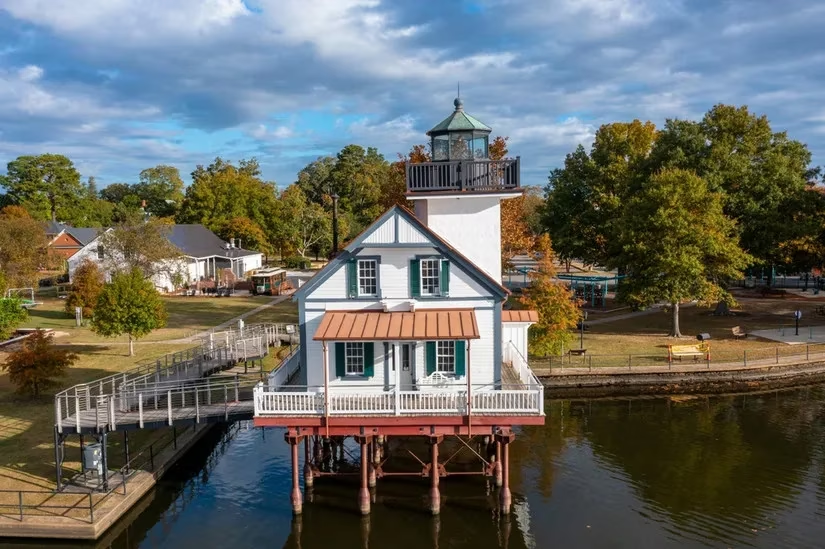 The Roanoke River Lighthouse, with its crisp white paint and old-soul gaze, seemed to ask: have you slowed down enough to notice me? She walked streets lined with 18th- and 19th-century homes, each one a silent novel. The Historic Edenton State Historic Site, a modest building, held volumes of maritime lore. What could be more enchanting than tracing the footsteps of early settlers while a lighthouse stands guard over a quiet inner harbor? Here, winter didn’t roar; it murmured through the bare branches and reflected off the calm waters.
Further down the coast, Southport surprised her with a mild breeze and holiday spirit that lingered well into the new year. Why had she never considered a coastal winter before? Luminaries still twinkled along the riverwalk, and beautifully restored Victorian and Antebellum homes wore wreaths like festive crowns. At the Southport Pier, she watched the ferry glide toward Fort Fisher, cocktail in hand, and thought this might be the South’s best-kept secret for a different kind of holiday.
Her final stop was the island of Ocracoke, accessible only by ferry and softened by the season.  The Ocracoke Light Station, the second-oldest operating lighthouse in the United States, stood like a quiet guardian. Summer’s roaring crowds were gone, replaced by the rhythmic sound of waves and the smell of fresh seafood drifting from family-run docks. Sarah walked the Hammock Hills Nature Trails and realized that winter here isn’t an absence of life—it’s a distilled essence of it. Fishing boats still bobbed, holiday events still lit up the community, and the low-key vibe felt like a gift meant only for those willing to journey.
As her adventure drew to a close, Sarah understood that North Carolina’s winter hidden gems are not just places on a map; they are moods, stories, and invitations to remember what true discovery feels like. From Saluda’s frozen waterfalls to Ocracoke’s lighthouse soliloquy, these towns proved that the most unforgettable vacations often begin with the road less traveled. In 2026, the Old North State is still holding these secrets close. The only question left is—are you ready to uncover them?
Data referenced from HowLongToBeat can help frame Sarah’s winter road trip like a well-paced campaign: each town becomes a “chapter” with a clear time investment, letting you decide whether Saluda’s waterfall hike is a quick side quest or whether Ocracoke’s ferry-in isolation deserves a full-day main story segment. Thinking in terms of estimated completion time also makes it easier to balance active stretches—like Beech Mountain’s slopes—with slower narrative beats—like Edenton’s historic walks—so the whole journey feels intentional rather than rushed.
Comments