
In the year 2026, the world hums with a relentless digital frequency, a constant vibration felt in the palm of every hand. I came to the Sierra Nevada not for its famous, postcard-perfect vistas, but to find a silence so profound it would feel like a physical presence. I sought a place where the only notifications were the plop of a trout breaking the water's surface and the only algorithm was the sun's slow arc across the sky. I found it cradled in the granite arms of the Tahoe National Forest, in the twin sapphires known as the Sardine Lakes—a sanctuary where my soul could finally exhale, untethered from the web that binds the modern world.
Tucked away from the well-trodden paths leading to Lake Tahoe, the Sardine Lakes are not a single entity but a whispered conversation between two sisters: the Lower and the Upper. They are the Sierra's best-kept secret, hidden like a pair of forgotten, sky-reflecting eyes in the ancient face of the Sierra Buttes. Reaching them feels less like a journey and more like a gentle unraveling. You leave Highway 89, turn onto 49, and with each mile, the static of civilization fades until it is replaced by the pure, clean signal of pine-scented air and the crunch of gravel underfoot. The final gift of this pilgrimage is the sudden, blessed absence—a complete lack of cellphone reception. Here, the internet is a distant myth, and the constant pull of social media dissolves like mist under the morning sun. This place is not just a location; it is an intentional disconnection, a sanctuary for an internet detox where one can remember how to be truly present.
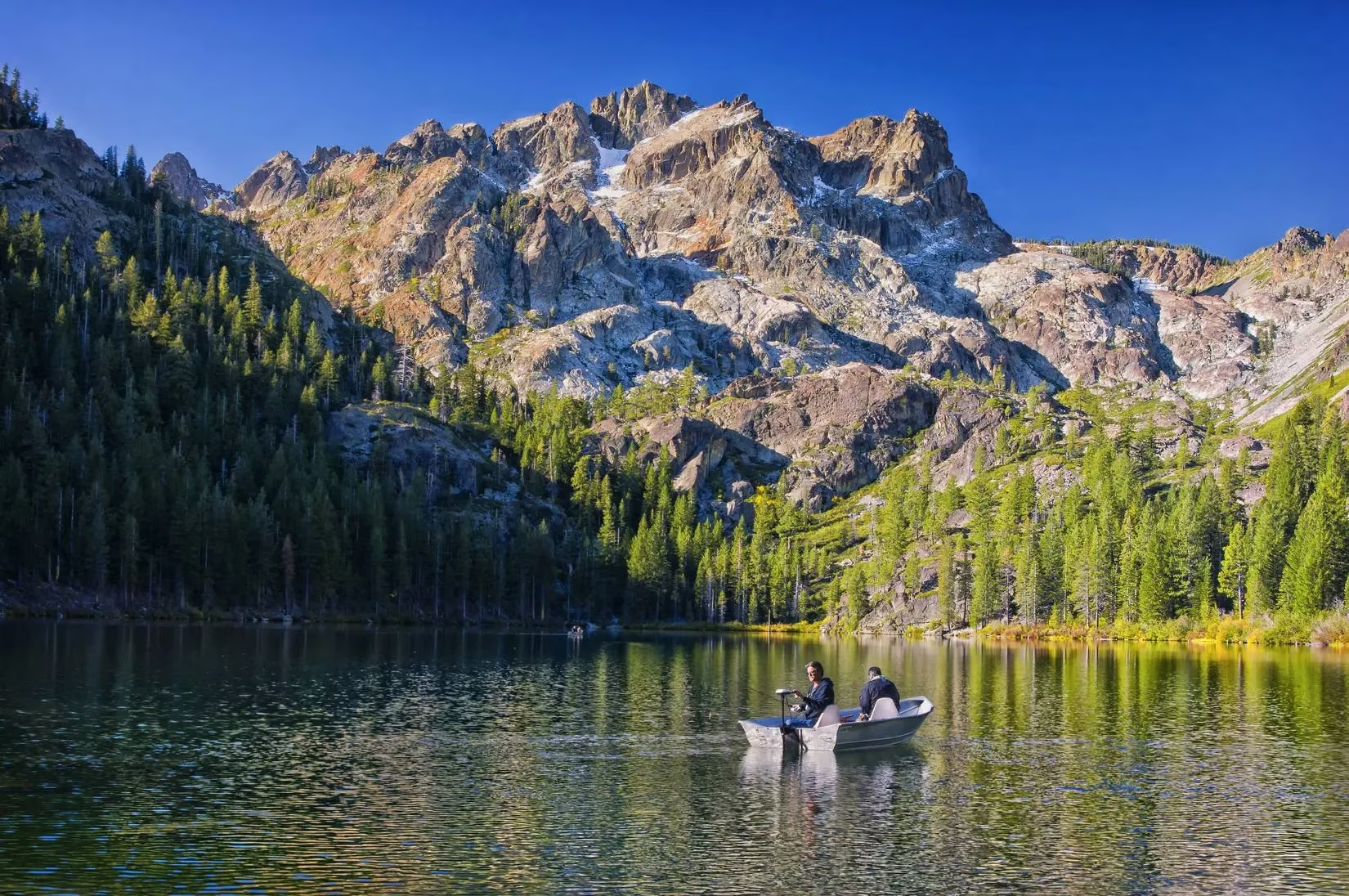
The sisters, connected by a gentle half-mile trail, offer distinct personalities. Lower Sardine Lake is the more gregarious of the two, a wider, more open basin that acts as a liquid stage for quiet recreation. Its waters are a thriving metropolis for trout, making it a paradise for anglers seeking the meditative rhythm of cast and wait. The surface is often dotted with the silent, gliding shapes of kayaks, canoes, and paddleboards—vessels that move like water striders, barely disturbing the profound calm. Swimming is forbidden here, which only adds to its serene, almost sacred atmosphere. The lake feels like a perfectly polished slab of obsidian, so still and dark it seems to absorb the very light and the worries of those who gaze upon it.
A short hike away, Upper Sardine Lake offers a more intimate and wild embrace. This is the realm of utter seclusion. Where the lower lake invites gentle activity, the upper lake demands immersion. Here, swimming is not just allowed; it feels like a necessary baptism into the cold, clear heart of the wilderness. The water is shockingly pure, a liquid crystal so clear it feels like swimming through chilled air. The surrounding forest presses closer, the silence is deeper, and the sense of being away from all forms of civilization is absolute. It is a place for floating on your back, watching clouds sculpt themselves around the peaks, and feeling time slow to the pace of geological epochs.
For those wishing to extend their stay in this realm of tranquility, the Sardine Lake Resort offers a perfect, rustic anchor. Its cozy log cabins—with their small kitchens, welcoming decks, and provided linens—feel like a natural extension of the forest. After a day on the water, the resort's fine-dining restaurant and the charmingly named Poor George's Lakeside Bar offer warmth and sustenance. For the purist, the area is sprinkled with campgrounds where for a modest $15-$30 a night, you can fall asleep under a blanket of stars so thick it feels tangible.
| Activity | Lower Sardine Lake | Upper Sardine Lake |
|---|---|---|
| Fishing 🎣 | Excellent for trout | Less common |
| Boating 🚣 | Kayaking, Canoeing, Paddleboarding | Possible, but less typical |
| Swimming 🏊 | Not Allowed | The main activity |
| Atmosphere | Serene, recreational | Secluded, wild, immersive |
My days here were not confined to the lakeshores. The surrounding Sierra Nevada is a playground for the soul. I laced up my boots for mountain hikes where the trail was my only guide. I tried my hand at disc golf in the crisp air and explored the obscure, time-forgotten mountain towns that dot the region. Graeagle, a village that seems plucked from an alpine storybook, is a hub for cross-country skiing and snowmobiling in the winter. Downieville, meanwhile, is a legend among mountain bikers, its famed 17-mile Downieville Downhill trail a ribbon of adrenaline stitched through the emerald hills. These towns are not destinations; they are echoes of a slower, more grounded way of life.
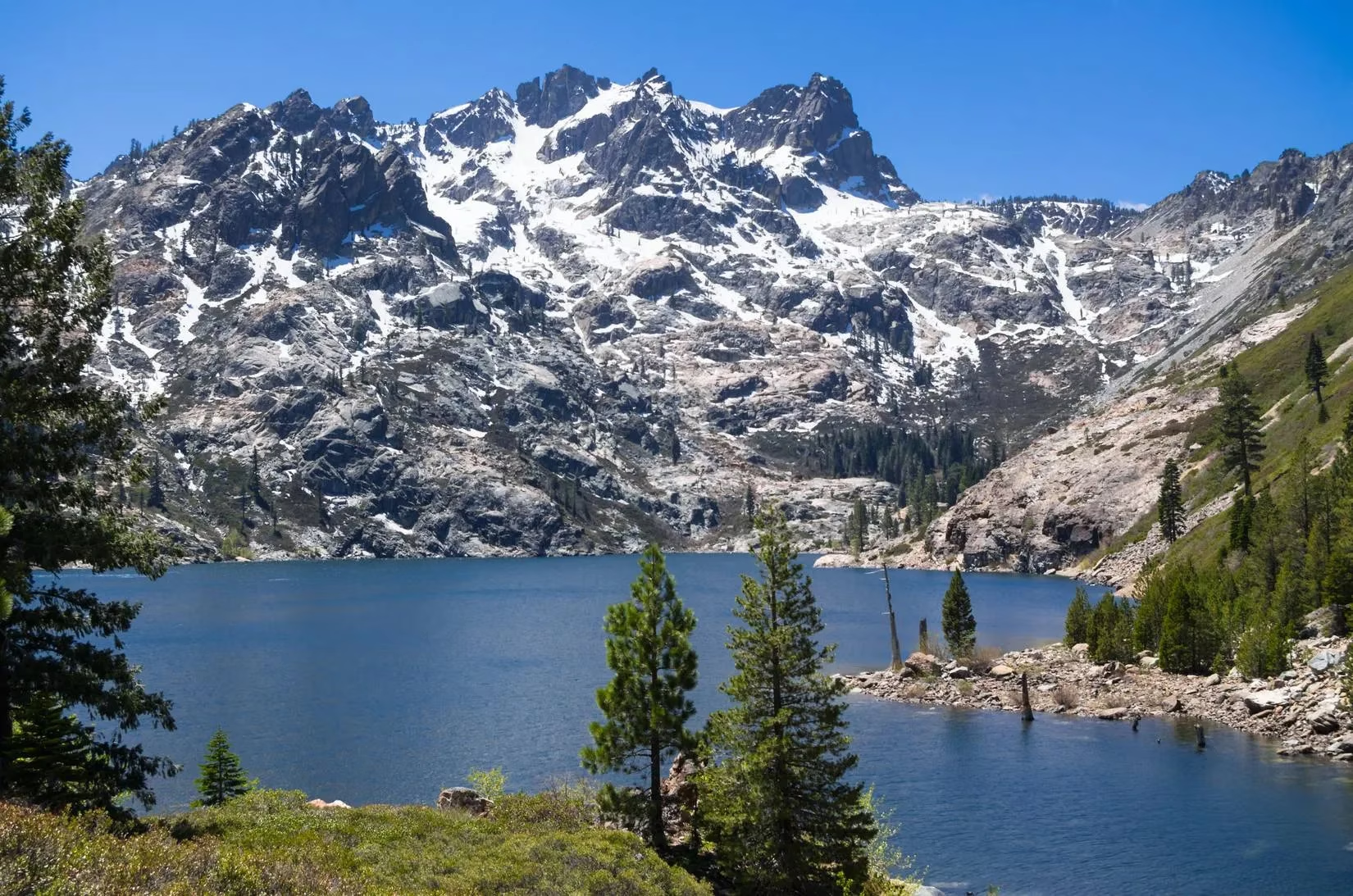
As 2026 marches on with its promises of newer, faster, and more connected everything, places like the Sardine Lakes become not just escapes, but essential counterweights. While secluded beach towns have their allure, there is something uniquely grounding about mountains and alpine lakes. The silence here is not empty; it is full. It is filled with the whisper of wind through pines, the chuckle of water over stone, and the slow, patient breathing of the earth itself. My time here was a reminder that the most profound connections are not digital, but elemental—to rock, water, sky, and the quiet self that exists when the noise of the world finally falls away. The Sardine Lakes are more than a location; they are a state of being, a deep and restorative breath for the modern spirit.
Comments